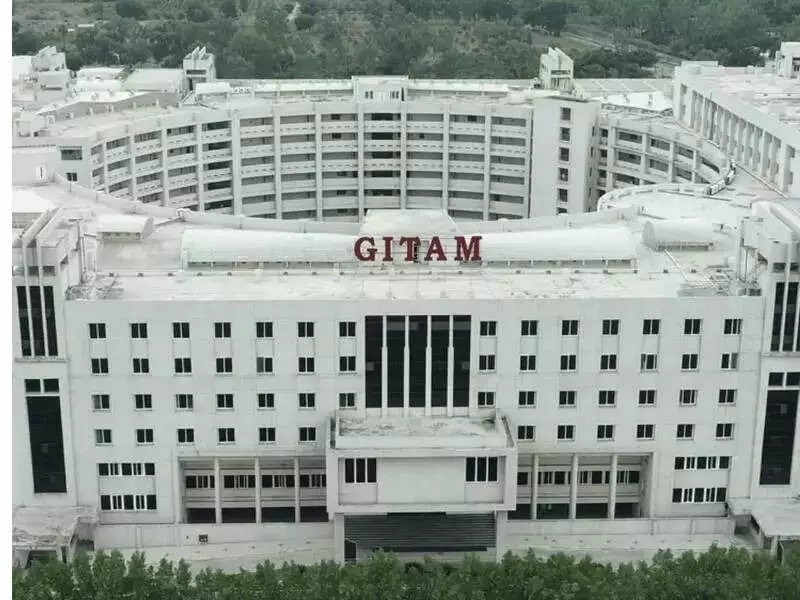
Telangana High Court Directs GITAM to Deposit 54 Crore in Power Dues Dispute
In a significant legal development from Hyderabad, a division bench of the Telangana High Court issued a crucial directive on Friday concerning a long-standing power dues dispute. The court has ordered the Gandhi Institute of Technology and Management (GITAM) to deposit 50% of its substantial pending power dues, amounting to 54 crore rupees, with the Telangana Southern Power Distribution Company Limited (TGSPDCL) within a strict timeframe of three weeks.
Background of the Legal Battle
The court's direction emerged during the hearing of an appeal filed by the discom, which challenged a previous single judge's order. That earlier order had restored electricity supply to the university despite the existence of long-pending arrears. The distribution company argued vehemently that this restoration was arbitrary, as it failed to mandate any payment toward the outstanding dues, creating a precedent that could undermine utility revenue collection efforts.
Substantial Dues Accumulated Over Decades
During the proceedings, counsel for TGSPDCL presented detailed submissions revealing the staggering scale of the arrears. According to their account, GITAM has accumulated power dues totaling 108 crore rupees over nearly two decades, with the financial liability tracing back to the 2008–09 fiscal year. This substantial amount excludes any accrued interest, which could further increase the financial burden on the educational institution.
The discom's legal representative emphasized that the mounting arrears had reached a critical point, prompting the superintending engineer to issue a fresh notice to the university in September 2025. This notice explicitly demanded clearance of the entire outstanding amount, highlighting the urgency of the situation for the power distribution company's financial health.
Court's Rationale and Standard Norms
The counsel for TGSPDCL made a compelling argument before the division bench, urging the court to direct the university to deposit a substantial portion of the dues. He pointed out that payment of at least 50% of arrears represents the standard norm for restoration of power supply in such disputes, a practice that ensures both parties have skin in the game during adjudication processes.
This interim arrangement allows the legal dispute to proceed while ensuring the discom receives partial compensation for services rendered. The court's decision to order the 54 crore deposit reflects a balanced approach, acknowledging the university's operational needs while protecting the utility's financial interests during what could be prolonged legal proceedings.
Implications for Educational Institutions and Utilities
This case highlights several important considerations for both educational institutions and public utilities:
- The financial responsibility of educational institutions toward essential service providers
- The legal mechanisms available to utilities for recovering substantial arrears
- The judiciary's role in balancing operational continuity with financial accountability
- The precedent this sets for similar disputes between institutions and service providers
The three-week deadline for deposit adds urgency to the matter, requiring GITAM to arrange substantial funds while the broader dispute over the remaining 50% of dues continues through the legal system. This development serves as a reminder that even prestigious educational institutions must maintain timely payments for essential services to avoid legal complications and potential disruption to their operations.