Telangana High Court Condemns Police for Breathalyzer Test on Advocate at Station
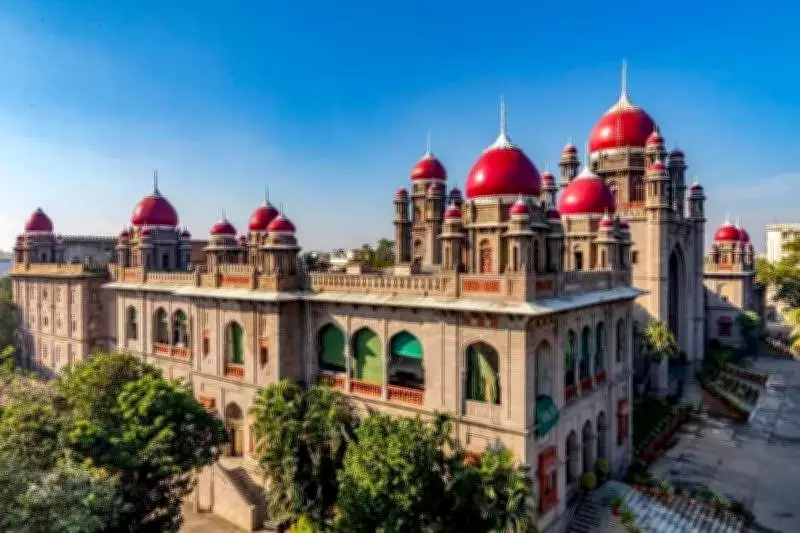
The Telangana High Court has taken a stern stance against the Panjagutta police station after an advocate was subjected to a breathalyzer test and alleged harassment while inquiring about a complaint. Justice EV Venugopal, hearing a petition filed by advocate Singapogu Subba Rao, remarked that such an act by the police "is unknown to law" and requires detailed examination.
Court Questions Police Authority and Orders Evidence Preservation
Justice Venugopal directly questioned under what authority the Station House Officer (SHO) of Panjagutta conducted a breath test on a person merely visiting the police station. The judge also inquired about the reasons for the disturbance that allegedly erupted, as claimed by the police officials. "The videograph placed before the court demonstrates the petitioner being put to a test, which is unknown to law and requires detailed examination," stated Justice Venugopal.
The court has issued specific directives to the police, including:

- Filing a detailed counter in the matter
- Preserving footage from all CCTV cameras at the Panjagutta police station from 11 AM to 5 PM on April 13, when the incident occurred
- Ensuring that SHO Panjagutta and other police officials do not interfere with the life and liberty of the petitioner
Advocate's Allegations of Mistreatment
Senior counsel V Raghunath, representing petitioner Subba Rao, presented serious allegations against the police. According to Raghunath, SHO Rama Krishna and his team surrounded Subba Rao, abused him, ill-treated him, and later subjected him to the breathalyzer test. "He was treated like a dacoit or some hardcore criminal just for asking the status of the investigation," argued Raghunath before the court.
The counsel further revealed that Subba Rao recorded 27 mg/dl in the breath test, a level that is legally permissible even for driving a vehicle. Raghunath submitted a video clip of the incident as evidence to support these claims.
Police Defense and Government Response
Government pleader for Home Mahesh Raje, representing the police, denied the allegations and presented a different version of events. Raje claimed that Subba Rao's behavior with the police was rude and not cordial, justifying the need for the breath test. "With the permission of the magistrate, a case was registered on his complaint. Later a case was also registered on a complaint from one Mangli (a singer) after permission from the magistrate," explained Raje.
The government pleader requested additional time to file a comprehensive counter to address all allegations properly. This legal confrontation highlights ongoing tensions between law enforcement procedures and individual rights within police station environments.
Broader Implications for Police Conduct and Legal Rights
This case raises significant questions about police authority and the treatment of citizens, particularly legal professionals, at police stations. The High Court's intervention underscores the judiciary's role in checking potential overreach by law enforcement agencies. The preservation of CCTV footage and the court's directive against interference with the petitioner's liberty indicate a serious judicial scrutiny of police actions.
The matter continues to develop as both sides prepare their legal arguments, with the court maintaining close oversight of the proceedings to ensure proper legal procedures are followed and individual rights are protected.