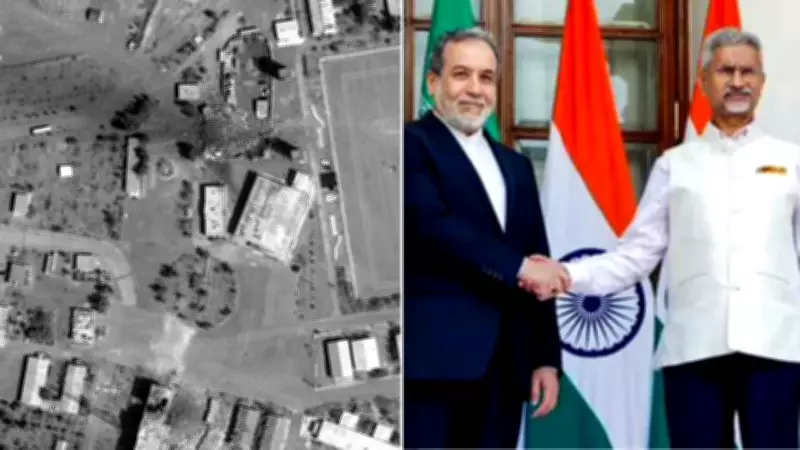
Explosions Rock Tehran as Gulf War Intensifies
Western Tehran was rocked by a series of powerful explosions on the thirteenth day of the escalating conflict involving Israel, the United States, and Iran. Thick plumes of smoke billowed into the sky, although the specific targets of the strikes remain unclear amid the chaos.
In a stern warning, Iran's Parliament Speaker, Mohammad Bagher Ghalibaf, declared that Tehran would abandon all restraint if US or Israeli forces attack Persian Gulf islands, such as the strategic Kharg Island. This statement underscores the high stakes in the region.
Regional Fallout and Economic Shockwaves
The conflict's ripple effects are being felt across the Middle East. An Italian military base in Erbil, Iraq, sustained significant damage from a missile or drone attack, though no casualties were reported. In a move with global implications, Gulf states collectively slashed oil production by a staggering 10 million barrels per day, marking the largest disruption in history and sending shockwaves through energy markets.
Iran has also issued a stark warning to major US technology firms, including Google, Amazon, Microsoft, and Nvidia, labeling them as "legitimate targets" in the ongoing confrontation.
India's Diplomatic Maneuvers for Security
Amid the rising tensions, India's External Affairs Minister, Dr. S. Jaishankar, has been actively engaged in diplomacy. He has held three crucial conversations with his Iranian counterpart, focusing squarely on ensuring maritime shipping safety and safeguarding India's energy security in the volatile Gulf region.
The Ministry of External Affairs spokesperson, Randhir Jaiswal, indicated that details are still emerging, but the talks underscore India's proactive stance. In a significant development, Iran has granted safe passage through the critical Strait of Hormuz exclusively to Indian-flagged vessels, while imposing restrictions on ships from the US, Europe, and Israel.
However, the Islamic Revolutionary Guard Corps commander reported that Iran struck two non-compliant ships that ignored prior warnings, highlighting the perilous situation for maritime traffic.
Domestic Energy Concerns Addressed
The crisis sparked a heated debate in India's Lok Sabha. Leader of the Opposition, Rahul Gandhi, raised alarms about potential energy shortages and "panic" over LPG supply if the Strait of Hormuz were to close, referencing former US President Donald Trump's remarks on the issue.
Oil and Petroleum Minister Hardeep Singh Puri firmly rebutted these concerns. He assured the house that there are no shortages of petrol, diesel, LPG, or aviation turbine fuel. Minister Puri detailed that LPG production has increased by 28%, refineries are operating at over 100% capacity, and India now sources 70% of its crude oil from routes bypassing the Strait of Hormuz, mitigating the immediate risk. Speaker Om Birla urged adherence to parliamentary rules during the discussion, while Puri called for national unity in facing the external crisis.
Other National Updates
In a tragic incident in Uttar Pradesh, Ghazipur police arrested a mother, Afsana, and her son, Afsar, for the alleged honour killing of 19-year-old Farzana. The victim was reportedly forced to consume sulphas poison due to her relationship with a Hindu youth. The accused later dumped her body in a field. A meticulous investigation using Call Detail Records (CDR) and CCTV footage cracked the case, leading to an FIR under the Bharatiya Nyaya Sanhita murder provisions.
In sports news, India's T20 World Cup-winning captain, Suryakumar Yadav, revealed that vice-captain Axar Patel was "very angry" after being omitted from two key matches in Ahmedabad, including the Super 8 loss to South Africa. SKY apologized for what he admitted was a selection mistake, and Axar accepted. The captain hailed this moment as a turning point that galvanized the team towards their record third T20 World Cup title.