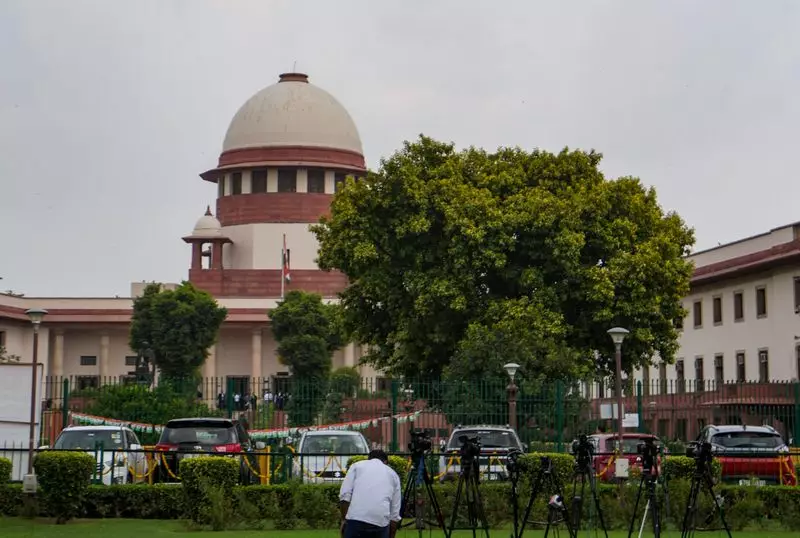
The Supreme Court of India engaged in a sharp exchange with petitioners on Thursday, questioning whether the country should roll out a "red carpet" welcome for individuals who have entered its territory illegally. The bench was hearing a batch of petitions challenging the government's decision to deport Rohingya refugees back to Myanmar.
Centre's Firm Stance on National Security
Representing the Union government, Solicitor General Tushar Mehta presented a robust defense before a bench comprising Chief Justice of India D Y Chandrachud and Justices J B Pardiwala and Manoj Misra. Mehta argued that the government's actions are driven by considerations of national security and public interest. He emphasized that the Rohingya, who fled persecution in Myanmar, are illegal immigrants and their continued presence poses a significant threat to the country's internal security.
The Solicitor General informed the court that the Centre had already deported several batches of Rohingya individuals. He stated that the process is conducted in accordance with established legal procedures and with the full cooperation of the Myanmar government, which accepts its citizens back. Mehta's arguments centered on the sovereign right of the state to identify and deport foreigners residing in the country without valid legal authorization.
Court's Probing Questions on Humanitarian Grounds
The petitioners, represented by senior advocates like Kapil Sibal and Prashant Bhushan, countered the government's position. They pleaded for the court's intervention, arguing that deporting the Rohingya to Myanmar would expose them to severe risk and persecution, violating the fundamental principle of non-refoulement under international law.
The court's response, however, was pointed. Justice Pardiwala remarked, "We are not here to decide the foreign policy of the country." The bench further questioned the petitioners' stance, asking if they were suggesting that any and every illegal intruder should be accorded a privileged status. "Are you saying that every illegal intruder into this country must be given a red carpet welcome?" the bench queried, highlighting the complex interplay between humanitarian concerns and the strict enforcement of immigration laws.
Balancing Sovereignty and Human Rights
The hearing underscores a critical legal and ethical dilemma facing India. On one side is the government's unwavering focus on national security and the integrity of its borders. The Centre maintains that allowing illegal immigrants to stay sets a dangerous precedent and could encourage further illegal migration, potentially straining resources and compromising security.
On the other side are the pleas from human rights activists and the petitioners, who stress the dire humanitarian crisis from which the Rohingya have escaped. They argue that India, with its historical traditions of asylum and its moral standing in the world, has a responsibility to protect vulnerable populations facing genocide and violence in their homeland.
The Supreme Court has not issued any interim order halting the deportations at this stage. The proceedings have been adjourned, with the matter expected to be heard again in detail. The final ruling from the apex court will have profound implications, setting a precedent for how India navigates the tense balance between its sovereign rights and its humanitarian obligations in matters of refugee policy.