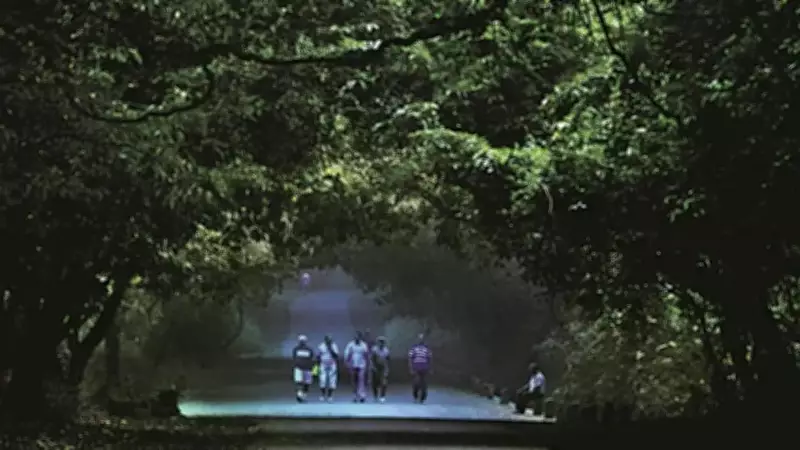
Demolition Drive in Sanjay Gandhi National Park Sparks Adivasi Protests Over Land Rights
A recent demolition drive conducted by the Forest Department inside Sanjay Gandhi National Park (SGNP) has been halted following widespread protests by Adivasi residents, reigniting a long-standing dispute over land rights and rehabilitation. The conflict centers on whether tribal families living within the protected forest have any legal right to stay, with both sides presenting contrasting historical narratives.
Forest Department Issues Notices Based on 1997 Court Order
On January 17, the Forest Department issued notices to 10 hamlets inside SGNP, covering 385 houses in areas including Magathane, Malad, and Gundgaon. The department described these homes as "re-encroachments" built by families who were previously relocated but later returned to the park. This action follows a 1997 Bombay High Court order directing the removal of all encroachments within SGNP.
Under a rehabilitation scheme initiated after the court order, families listed on the 1995 electoral rolls were shifted to Chandivali and Powai after paying Rs 7,000 each. Over 10,000 families were rehabilitated under this program. However, the Forest Department claims that 385 of these families subsequently returned and rebuilt their homes inside the park.
Renewed Demolition Drive and Immediate Protests
The demolition drive resumed recently after a 2023 contempt petition argued that the 1997 court order had not been fully implemented. The High Court then established a High Powered Committee (HPC) to restart the process. The committee decided that the 385 families who had returned after rehabilitation would be removed first.
Notices were issued asking families to file objections by January 24, with demolitions planned between January 19 and 28. However, the inclusion of approximately 40 Adivasi homes in the list of 385 structures triggered immediate protests across several hamlets, including Navapada, Chinchpada, Tumnipada, Ravanpada, and Ketlaipada.
On Tuesday, protesters blocked bulldozers and forced officials to stop the demolition drive. Following political intervention, Maharashtra Forest Minister Ganesh Naik ordered a temporary pause on demolitions, stating that tribal issues and rehabilitation would be reconsidered.
Contrasting Historical Claims and Legal Standpoints
The Forest Department maintains that there are no "original" Adivasis living inside SGNP today, citing a Bombay High Court judgment in the case of Manik Rama Sapte vs State of Maharashtra. According to the department, the court held that all original tribal families were shifted out of the forest in 1977 and relocated to Palghar district. The department argues that those currently residing in the park are encroachers who returned after rehabilitation.
Forest officials state that only a small number of tribal families were living inside the forest area when it was taken over by the department. These families were shifted to Khutal village in Palghar district in 1977, with the government funding their resettlement. Later, when SGNP was formally notified as a national park under the Wildlife Protection Act, all land claims were examined and rejected.
In 2003, the Bombay High Court acknowledged that Adivasis have a special relationship with forests but rejected the claim that thousands of tribal families lived inside SGNP. The court stated that only a few hundred families were found and that they did not possess legal rights over the forest land, treating them similarly to other encroachers for eviction and rehabilitation purposes.
Adivasi Perspectives and Ongoing Legal Ambiguity
Former SGNP officials reveal that many families shifted out in 1977 later returned due to failed rehabilitation efforts. Over time, their population increased as families expanded. The Forest Department contends that since these families were already rehabilitated once, they cannot claim forest rights again.
Adivasi residents counter that their families have lived in SGNP for generations and were forcibly evicted in 1977. They argue that many returned because they could not survive at the relocation site. Additionally, they point to the Forest Rights Act, 2006, under which their claims are still under verification. They question why they are being labeled as encroachers despite being traditional forest dwellers.
Current Status and Future Implications
Following the protests, Forest Minister Ganesh Naik has indicated that some families may be provided homes nearby, while those who returned after rehabilitation will be informed of the rules. For now, demolitions have been halted, but the legal dispute over residency rights within SGNP remains unresolved. The situation highlights the complex interplay between conservation efforts, historical injustices, and the ongoing struggle for tribal rights in protected forest areas.