The Scarred Finger That Solved Bengaluru's 24-Year-Old Double Murder Mystery
In an era before digital surveillance became ubiquitous, a single physical detail – a scarred finger – became the crucial breakthrough in solving one of Bengaluru's most haunting crimes. The 2002 double murder case, which had remained cold for years, was finally cracked through meticulous police work and attention to minute details that modern technology often overlooks.
A City Gripped by Fear
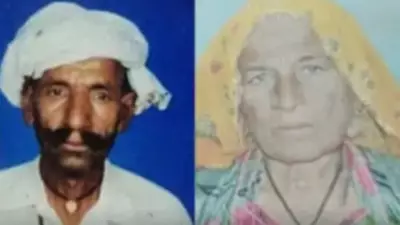
On February 1, 2002, panic spread through Bengaluru as news emerged of a brutal double murder in a quiet apartment. A 35-year-old woman and her four-year-old daughter were found dead in their first-floor flat, with the woman having been sexually assaulted before being murdered. The child, investigators believed, was killed because she might have witnessed the attack.
The crime scene presented investigators with a daunting challenge – no signs of forced entry, no eyewitnesses, and gold ornaments missing from the house suggested robbery as a possible motive. Yet, neighbors reported hearing nothing unusual, and no one recalled seeing suspicious individuals entering or leaving the building.

As angry crowds gathered outside the apartment building, public confidence in policing began to erode. The then Bengaluru police commissioner H T Sangliana personally took note of the case, recognizing the need for experienced investigators to handle what had become a sensational and high-pressure situation.
The Investigation Without Digital Footprints
Inspector Abdul Azeem, who was brought into the investigation, immediately sensed the gravity of the crime. "The condition of the woman's body made it clear this was not just a robbery, it was rape followed by murder," he later recalled. "The killing of the child indicated desperation; someone feared being identified."
This was an investigation conducted in what now seems like a different world – before CCTV cameras became commonplace, before mobile phones routinely generated call data records, and long before location tracking or digital footprints became investigative staples. Police work relied heavily on observation, memory, instinct, and relentless legwork.
The victims belonged to a Marwadi family originally from Rajasthan who ran an electric cable wholesale business. Investigators explored every possible angle:
- Business rivalries
- Financial disputes
- Personal enmities
- Family tensions
Yet, by every conventional measure, the crime left no clues. No eyewitnesses, no physical trail, and no immediate suspects emerged from the initial investigation.
The Breakthrough Through Persistent Questioning
With no external leads, investigators turned their attention inward – to the household itself. Persistent questioning revealed that the family had previously employed two men from Rajasthan – Deeparam and Abha Ram – at their electric cable shop. Deeparam had even worked briefly as domestic help in the house but had been dismissed six months before the murders due to frequent intoxication and erratic behavior.
The crucial detail emerged when the woman's brother-in-law recalled seeing Deeparam in Bengaluru just a week before the murders, despite being told he had returned to Rajasthan. Investigators uncovered that Deeparam harbored a deep grudge – furious at being removed from employment and unable to tolerate the humiliation of his dismissal.
The murders, investigators concluded, were an act of revenge – he wanted to punish the family and take what he believed was owed to him.
The Calculated Gamble That Paid Off
The police followed a familiar behavioral pattern – migrant workers returning to Bengaluru often stayed in low-cost lodges in commercial areas. A search led to a lodge where Abha Ram had recently stayed, and he was detained first. Some stolen property was recovered, but during interrogation, he claimed ignorance about Deeparam's whereabouts.
Instead of pressing blindly, the police made a calculated move. They traced Deeparam's brother, who was working in Bengaluru, and summoned him for questioning. After recording his details and collecting his phone number, they allowed him to leave, placing the number under discreet observation.

"We knew he was the only link to Deeparam," Azeem later reflected. "If we held him, the trail would stop. So, we noted his number, let him go, and waited. That patience gave us the breakthrough."
The Scar That Cracked the Case
Three days later, the gamble paid off. A call from the monitored number was traced to Surat, Gujarat. Initially believed to be coming from a residence, further tracking revealed it was actually made from a public telephone booth.
A special police team was immediately dispatched, navigating flight delays and missed connections while coordinating between Bengaluru and Mumbai police. Local Marwadi youths were quietly enlisted to assist, with officers circulating photographs discreetly under the pretext of looking for individuals with information about a kidnapped girl.
From 8:30 AM, officers waited near the telephone booth, watching the steady flow of callers. Hours passed before three men walked up to the booth just before noon and began making calls. The display panel lit up with the STD code 080 – Bengaluru.
One detail cut through the anonymity of the crowd – one man had an unusually muscular index finger on his right hand, marked by a scar, a telltale sign of years of handling thick electric cable wires, while half of his face was hidden behind dark glasses.
"It was not something you notice unless you are looking very carefully," Azeem recalled. "But once I saw that finger, I knew. That was that moment, the case was cracked."
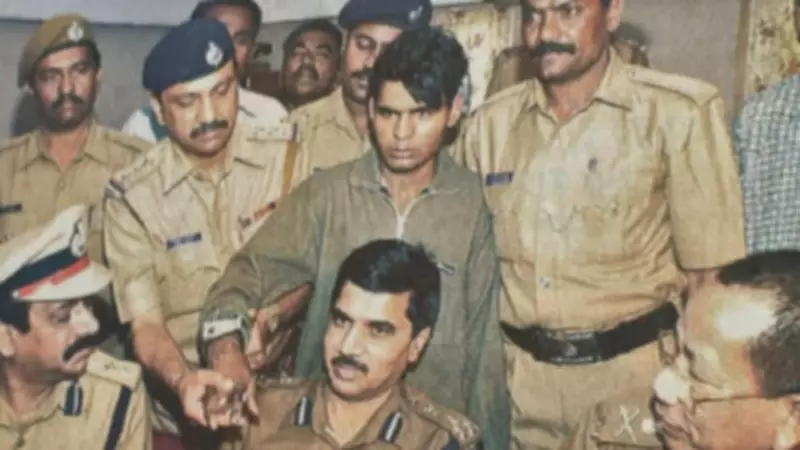
Gold ornaments stolen from the woman's house were recovered, with part of the jewelry later found pledged with a pawnbroker in Surat. Within a week, both accused were in custody, and the investigation was completed with a chargesheet filed.
Justice Served and Public Confidence Restored
On July 22, 2003 – 18 months after the murders – the trial court sentenced the accused to death. They later appealed to the Karnataka High Court, which reduced the sentence to life imprisonment.
For Bengaluru, the arrests brought relief after days of fear and uncertainty. For the police, cracking the case restored public confidence at a time when panic had begun to overshadow trust. The investigation demonstrated that even without modern technological tools, traditional police methods – observation, persistence, and attention to minute details – could solve even the most challenging crimes.
The scarred finger that led to Deeparam's identification became symbolic of an investigation that relied on human observation rather than digital evidence, proving that in crime solving, sometimes the smallest physical details can become the most significant breakthroughs.