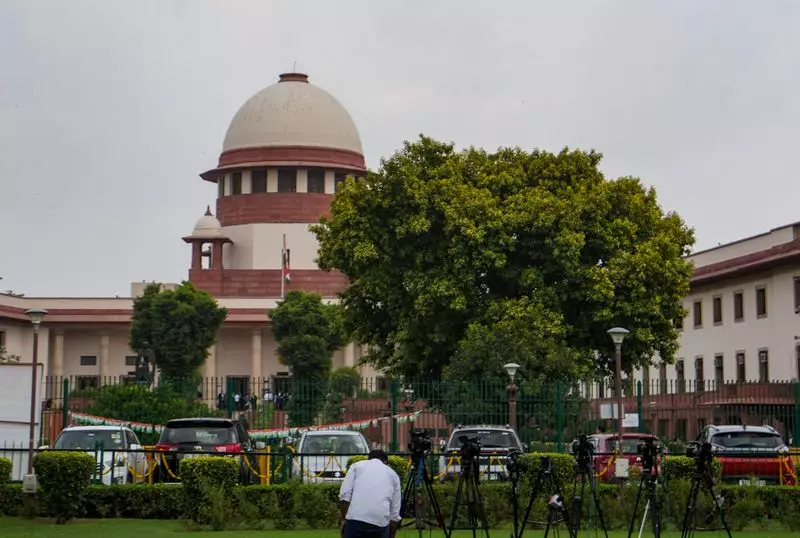
In an unprecedented move, the Supreme Court of India has broken with tradition by convening vacation benches during its annual winter recess. For the first time in its history, judges, including Chief Justice of India Surya Kant, have sat to hear urgent matters, signaling a significant shift in the court's operational calendar.
A Historic Departure from Tradition
The Supreme Court's winter break, which began on December 18, 2023, and is scheduled to conclude on January 1, 2024, is typically a period when the court is in full recess. However, this year witnessed a landmark change. Two vacation benches were constituted to hear extremely urgent cases that could not wait for the court's official reopening.
One of these benches was notably presided over by Chief Justice of India Surya Kant himself, alongside Justice Dipankar Datta. The other bench comprised Justice Sanjiv Khanna and Justice SVN Bhatti. The decision to hold these sittings marks a historic first, demonstrating the court's evolving approach to ensuring access to justice without prolonged delays, even during scheduled holidays.

The Urgent Cases That Demanded Attention
The vacation benches addressed several pressing matters that required immediate judicial intervention. One significant case involved a plea from the Jammu and Kashmir High Court Bar Association. The association sought the release of its president, Mian Abdul Qayoom, a senior advocate who has been detained under the Public Safety Act (PSA).
Another critical issue brought before the bench was a petition challenging an order from the Calcutta High Court. This order had stayed a directive issued by the West Bengal government. The state government's directive pertained to the formation of a committee tasked with selecting the heads of state-run schools, a matter of administrative and educational importance.
Implications and a New Precedent
This operational shift by the Supreme Court carries substantial implications. It underscores the judiciary's recognition of the fact that legal emergencies do not adhere to holiday schedules. By making itself available for extremely urgent matters, the court reinforces its role as a perennial guardian of constitutional rights and justice.
The move sets a new precedent for the Indian judiciary's working model. It reflects a proactive and responsive institutional mindset, potentially paving the way for more flexible arrangements during other long breaks. Legal experts view this as a positive step towards reducing backlog for time-sensitive cases and enhancing the efficiency of the justice delivery system.
While the details of the hearings and their outcomes will unfold, the very act of convening these benches, especially with the CJI at the helm, is a powerful statement. It reaffirms the Supreme Court's commitment to its duty, prioritizing the exigencies of justice over conventional breaks, and could well become a standard practice for handling critical pleas during future vacations.