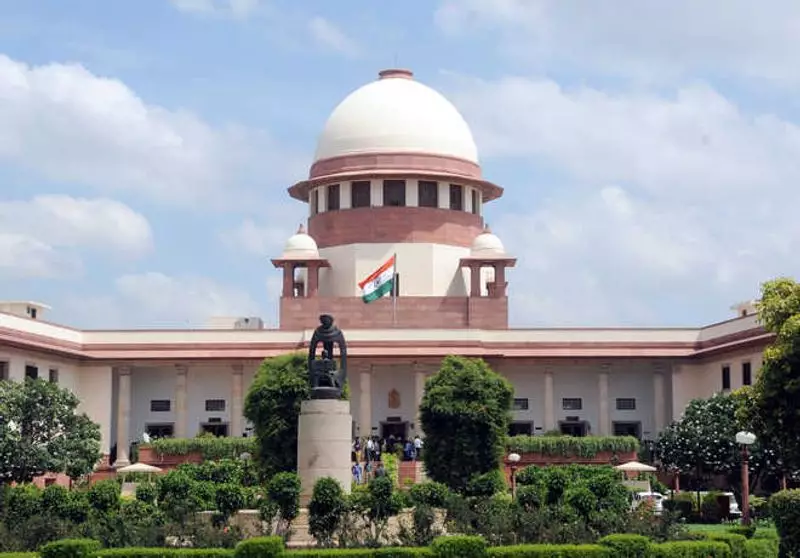
The Supreme Court of India has directed the Delhi government and municipal authorities to submit a detailed report outlining their action plan to address the growing menace of stray dogs in the capital. This directive came during a hearing on Wednesday, where the court acknowledged the severity of the issue, particularly highlighting the risk to children.
Court Takes Note of Disturbing Videos
The bench, comprising Justice Surya Kant and Justice K V Viswanathan, was hearing a plea filed by lawyer Anupam Tripathi. While Tripathi's petition raised concerns about alleged violence against stray dogs, the court's focus shifted decisively towards public safety. The justices pointed out that they had viewed several distressing videos showing stray dogs biting and attacking young children in various parts of Delhi.
The court explicitly stated that the primary concern must be the safety and welfare of citizens, especially children, who are vulnerable to such attacks. This observation set the tone for the proceedings, balancing the plea for animal welfare with the immediate need to protect human life and prevent injury.
Petitioner's Claims and Judicial Response
Advocate Anupam Tripathi, representing an organization named 'People for Animals', argued before the court that there has been a systematic "attack on dogs" in Delhi. He alleged that dogs were being beaten and killed, and his petition sought judicial intervention to stop this cruelty.
However, the Supreme Court bench provided a broader perspective. The justices acknowledged the petitioner's concerns but emphasized that the issue has two sides. They noted that while preventing cruelty to animals is important, the government also has a fundamental duty to ensure public safety and hygiene. The court questioned whether the petitioner expected the state to remain a mute spectator when stray dog attacks lead to human casualties and the spread of diseases like rabies.
The court has now sought a comprehensive response from the Delhi government, the Municipal Corporation of Delhi (MCD), and the New Delhi Municipal Council (NDMC). They have been given time to outline the steps they are taking or plan to take to manage the population of stray dogs and mitigate the threats they pose.
A Long-Standing and Complex Issue
This hearing brings back into focus the complex and emotionally charged debate surrounding stray dogs in Indian cities. The problem involves conflicting rights and responsibilities:
- Public Health and Safety: Stray dog bites can cause serious injury, trauma, and risk of rabies, a fatal disease. Children playing in parks and lanes are often the most vulnerable targets.
- Animal Welfare: Animal rights activists argue for compassionate and scientific methods like Animal Birth Control (ABC) programs for managing stray populations, as mandated by law, instead of culling or violent drives.
- Civic Administration: Municipal bodies are often caught in the middle, struggling with inadequate resources, legal mandates under the Prevention of Cruelty to Animals Act, and pressure from residents' welfare associations.
The Supreme Court's intervention underscores the need for a balanced, effective, and humane policy. The court's request for an action plan indicates a push for accountability from the local authorities. Their eventual report will likely need to detail the implementation of ABC programs, vaccination drives, waste management (which attracts strays), and public awareness campaigns.
The next hearing in this case is awaited, where the court will examine the authorities' responses and potentially issue further directions to find a sustainable solution to this persistent urban challenge.