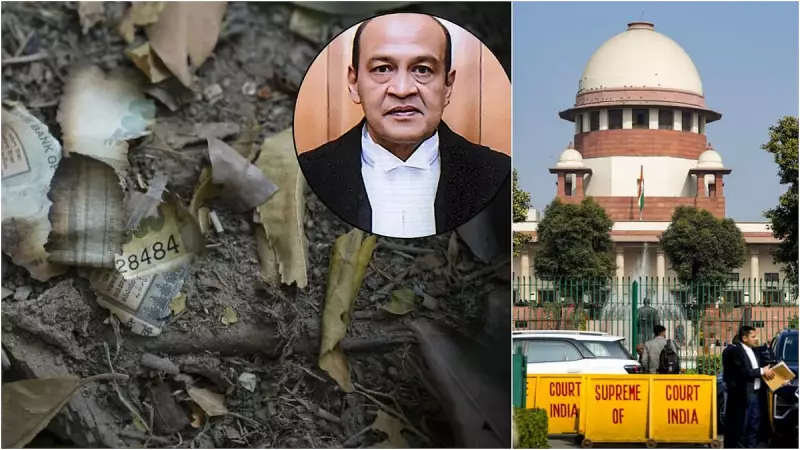
The Supreme Court of India has concluded its hearings and reserved its final judgment on a significant petition filed by Justice Yashwant Varma. The petition challenges the constitutional validity of an inquiry panel constituted to look into certain matters.
Key Arguments and Legal Proceedings
A bench comprising Justices Dipankar Datta and SC Sharma heard the case extensively before deciding to reserve their verdict. The decision to reserve the judgment came after detailed arguments from both sides were presented in court.
Representing Justice Yashwant Varma, senior advocates Mukul Rohatgi and Siddharth Luthra put forth their legal arguments against the formation and authority of the inquiry panel. On the opposing side, Solicitor General Tushar Mehta presented the stance representing both houses of Parliament—the Lok Sabha and the Rajya Sabha.
Core of the Legal Challenge
The central issue before the apex court revolves around the legality and procedural correctness of the inquiry panel in question. Justice Varma's legal team has assailed the panel's validity, raising important questions about its constitution and scope of power.
The hearings concluded on 08 January 2026, marking a crucial phase in this legal battle. The court's reserved verdict now awaits final deliberation and pronouncement by the two-judge bench.
Awaiting the Apex Court's Decision
With the verdict reserved, all parties now await the Supreme Court's final ruling, which will have significant implications. The judgment is expected to address key constitutional and procedural aspects concerning the powers of inquiry panels and judicial oversight.
The outcome will be closely watched by legal experts, political observers, and constitutional scholars across the nation. The Supreme Court's decision will provide clarity on the limits and validity of such investigative mechanisms within India's parliamentary framework.