
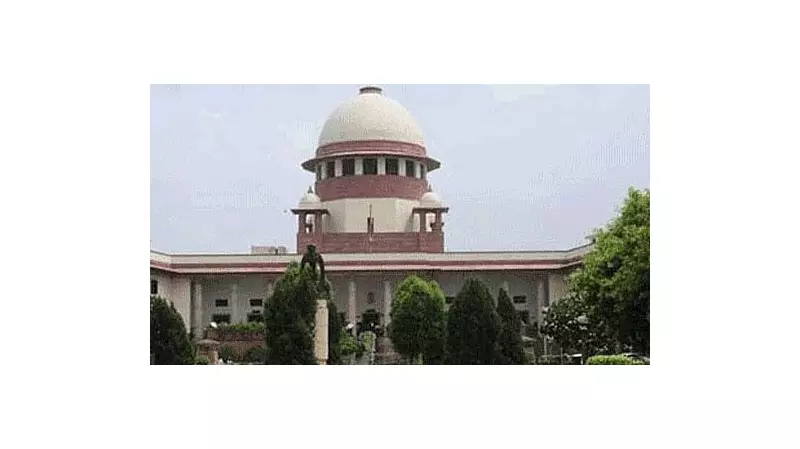
In a significant ruling, the Supreme Court of India has firmly rejected a legal petition that sought to challenge a specific provision of the Prevention of Money Laundering Act (PMLA). The apex court, while delivering its verdict, issued a strong caution against what it perceived as attempts by wealthy accused individuals to assail the stringent law.
Court's Firm Stance on Legal Challenge
The bench, hearing the case on 06 January 2026, dismissed the plea that questioned the constitutional validity of Section 44(1)(c) of the PMLA. This legal provision is a critical part of the anti-money laundering framework, governing aspects related to the trial of offences. The court emphasized the necessity of robust legal mechanisms to combat financial crimes and expressed concern over systematic challenges mounted by those with considerable resources.
Senior advocate Siddharth Luthra, representing the petitioner, argued that the constitutional validity of the clause was in serious doubt and merited a thorough examination by the judiciary. His submissions centered on the need for the court to scrutinize the legal foundations of the provision.
Details of the Petition and Judicial Response
The plea was filed by an individual identified as Khaitan. Luthra contended before the bench that the provision required judicial interpretation and review. However, the Supreme Court was not persuaded by these arguments. The judges highlighted the intent of the PMLA as a tool to dismantle complex networks of illicit finance and seemed wary of diluting its provisions through protracted legal battles.
The court's remarks underscored a judicial philosophy that views the PMLA as a vital statute for national economic security. The warning against "rich accused" assailing the law pointed to a growing judicial impatience with tactics perceived as using legal processes to delay or weaken the enforcement of financial regulations.
Implications for Anti-Money Laundering Enforcement
This ruling reinforces the legal architecture of the PMLA and is likely to have several immediate consequences:
- Strengthened Enforcement: The dismissal bolsters the position of the Enforcement Directorate (ED) and other agencies, allowing them to proceed with greater legal certainty under the challenged provision.
- Deterrent Effect: The court's strong language serves as a deterrent against frequent constitutional challenges to core PMLA sections by individuals and entities facing prosecution.
- Judicial Precedent: The verdict adds to a series of judgments where the Supreme Court has upheld the broad powers granted under the PMLA, affirming its necessity in the contemporary financial landscape.
The decision, delivered and reported on 06 January 2026, closes one avenue of legal challenge against the act. It signals the judiciary's continued support for stringent measures against money laundering, while also advising caution to ensure that the process itself remains fair and within constitutional bounds. The balance between empowering agencies and protecting individual rights remains a dynamic space in Indian jurisprudence.