Supreme Court Declines to Hear Challenge to Home Ministry's Vande Mataram Directive
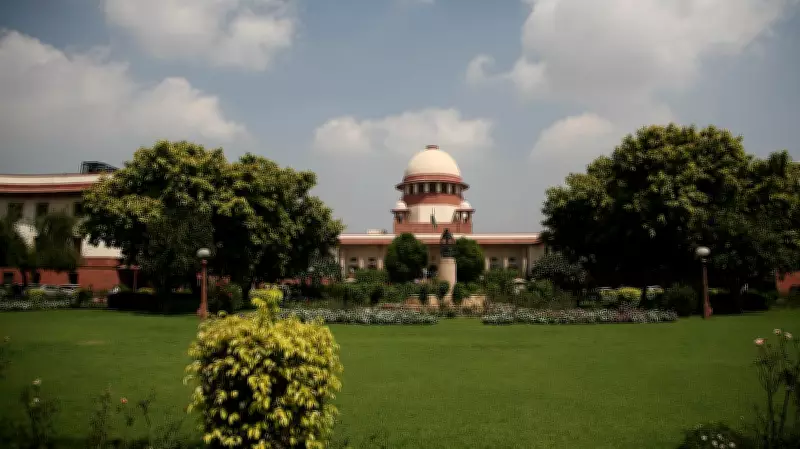
The Supreme Court of India has firmly refused to consider a petition that sought to challenge a circular issued by the Ministry of Home Affairs (MHA) regarding the recitation of Vande Mataram. The apex court's decision came during a hearing where the petitioner's counsel argued that patriotism cannot be forced upon citizens through official mandates.
Court Questions Compulsion of Patriotism in National Context
During the proceedings, when the petitioner's legal representative insisted that feelings of patriotism and national pride should not be compelled by governmental authorities, the Supreme Court bench posed a pointed counter-question. The justices inquired, "It can't be compelled even for the national anthem?" This rhetorical query highlighted the court's perspective on the broader issue of national symbols and mandatory expressions of loyalty.
The MHA's circular in question reportedly encourages or mandates the singing of Vande Mataram in certain official or public settings, aiming to foster national unity and cultural pride. The petitioner contended that such directives infringe upon individual freedoms and constitutional rights, arguing that genuine patriotism arises from voluntary sentiment rather than enforced compliance.

Legal and Constitutional Implications of the Ruling
By refusing to entertain the plea, the Supreme Court has effectively upheld the Home Ministry's authority to issue such circulars, at least for the time being. This decision underscores the judiciary's reluctance to intervene in matters perceived as pertaining to national identity and governmental policy on cultural issues.
The case raises significant questions about the balance between state authority and individual liberty in India's democratic framework. Key aspects include:
- The legal boundaries of governmental mandates on national symbols.
- The constitutional right to freedom of expression versus duties toward national icons.
- Historical and cultural significance of Vande Mataram as a national song.
Legal experts note that while the court did not delve into a detailed examination, its questioning suggests a nuanced view that some level of compulsion might be justifiable in the context of national anthems or songs, drawing parallels to existing practices.
Broader Context and Public Reaction
This ruling occurs amid ongoing debates in India about nationalism, patriotism, and the role of the state in promoting cultural values. Vande Mataram, written by Bankim Chandra Chattopadhyay, holds a revered place in India's independence movement and is often sung alongside the national anthem at official events.
Public and political reactions to the Supreme Court's stance are likely to be mixed, with supporters viewing it as a reinforcement of national unity, while critics may see it as an overreach of state power. The decision does not set a binding precedent but signals the judiciary's current disposition on similar issues.
As of March 25, 2026, the matter rests with the Supreme Court's refusal to proceed, leaving the MHA's circular intact unless challenged through other legal avenues. This development highlights the ongoing interplay between law, policy, and patriotism in contemporary India.