Supreme Court Declines to Entertain PIL on Denotified Tribes in Census
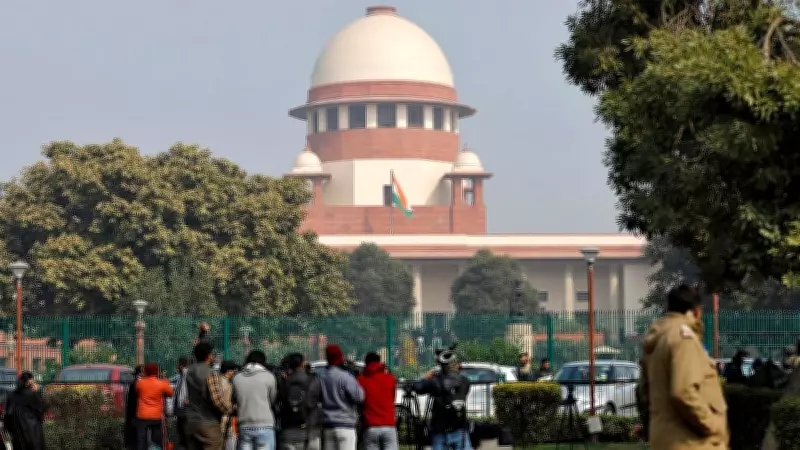
The Supreme Court of India has refused to entertain a Public Interest Litigation (PIL) that sought the inclusion of denotified nomadic tribes in the national Census. The PIL had requested a mandate for the census commissioner to ensure that members of these tribes are specifically identified during the population enumeration process.
Details of the PIL and Court's Decision
The PIL was filed with the aim of addressing the historical marginalization of denotified tribes, who have often been excluded from official records and government schemes. It argued that specific identification in the Census would help in better policy formulation and resource allocation for these communities. However, the Supreme Court, in its ruling, declined to issue such a directive, stating that it is not within its purview to interfere in the operational aspects of the Census conducted by the government.
The court emphasized that while the concerns raised in the PIL are valid, the matter falls under the executive domain, and it is up to the government to decide on the methodology and categories used in the Census. This decision underscores the judiciary's reluctance to overstep into administrative functions, even in cases involving vulnerable groups.

Implications for Denotified Tribes
Denotified tribes, historically labeled as "criminal tribes" during British rule, continue to face significant social and economic challenges. Their exclusion from Census data has been a longstanding issue, as it hampers efforts to:
- Accurately assess their population size and distribution.
- Design targeted welfare programs and affirmative action policies.
- Monitor their socio-economic progress and integration into mainstream society.
Despite the court's refusal, activists and community leaders have expressed hope that the government will take proactive steps to include these tribes in future Census exercises. They argue that without official recognition, denotified tribes remain invisible in national statistics, perpetuating their marginalization.
Background and Legal Context
The PIL was part of a broader movement to secure rights and recognition for denotified and nomadic tribes in India. Previous efforts have included demands for:
- Reservation in education and employment under the Scheduled Tribes category.
- Implementation of special development schemes funded by the central and state governments.
- Legal protections against discrimination and exploitation.
The Supreme Court's decision highlights the complex interplay between judicial intervention and executive authority in matters of social justice. While the court has often stepped in to protect minority rights, it has also shown restraint in cases where it deems the issue to be primarily administrative.
As of March 24, 2026, the ruling stands, leaving the fate of denotified tribes in the Census to governmental discretion. Stakeholders are now calling for increased advocacy and dialogue with policymakers to ensure that these communities are not left behind in India's demographic accounting.