Supreme Court Directs Haldwani Encroachers to Apply for PMAY, Rejects Rehabilitation Plea
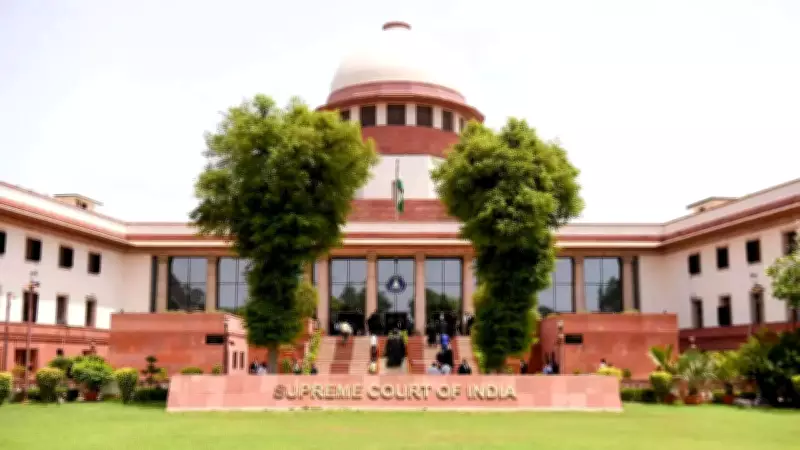
In a significant ruling, the Supreme Court of India on Tuesday firmly rejected the plea of illegal occupiers residing on more than 30 hectares of railway and state land in Haldwani, Uttarakhand, for in-situ rehabilitation. The court advised them to instead apply for housing under the Pradhan Mantri Awas Yojna (PMAY), emphasizing that public land cannot be claimed due to prolonged encroachment.
Court's Stance on Public Land and Humanitarian Concerns
A bench comprising Chief Justice Surya Kant and Justice Joymalya Bagchi addressed the arguments presented by advocate Prashant Bhushan, who represented the encroachers. Bhushan contended that the residents have lived on the land for decades and highlighted a past state government proposal to regularize their houses. He suggested that nearby additional land could be utilized for railway expansion, thereby allowing the current occupants to remain.
However, the bench unequivocally stated, "These are public lands. Just because the authorities slept over the encroachment, it does not become your land. When it is public land, it is the state’s prerogative to decide how to use it, and the occupiers cannot dictate its use." The court acknowledged humanitarian concerns but clarified that such concerns grant a privilege, not a right, to the encroachers.

Details of the Encroachment and Government Response
The court had previously recorded that approximately 30 hectares of land, owned by Indian Railways and the state, have been allegedly encroached upon. This area includes 4,365 illegally constructed houses, where over 50,000 people are currently residing. In response to an earlier Supreme Court directive to identify land for rehabilitation, Additional Solicitor General Aishwarya Bhati informed the bench that finding suitable land in the hilly terrain of Uttarakhand is challenging.
Bhati proposed a solution: if the occupiers apply for houses under PMAY, eligible individuals would be allotted dwelling units either within Uttarakhand or in neighboring Uttar Pradesh. This offer aims to provide a legal and structured housing alternative for those affected by the encroachment removal.
Compensation and Implementation Timeline
Further addressing the situation, the bench noted an offer from the railways and state government to provide financial assistance. They agreed to pay Rs 2,000 per month for each demolished house for a period of six months. This compensation is intended to help residents secure rental accommodations during the transition period. The counsel indicated that the eviction and rehabilitation camp could be established after March 19, allowing time for preparations and applications under PMAY.
The Supreme Court's decision underscores the importance of upholding public land rights while balancing humanitarian needs through government schemes like PMAY. It sets a precedent for handling similar encroachment cases across the country, prioritizing legal frameworks over prolonged unauthorized occupation.