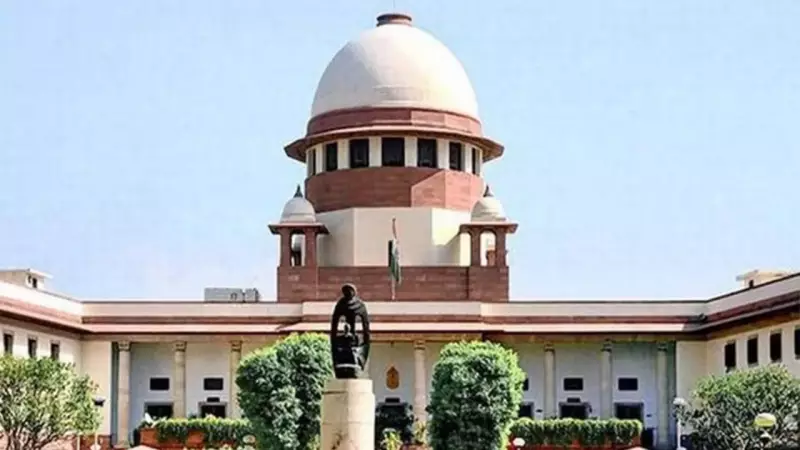
Supreme Court Declines to Restrain ED from Accessing I-PAC Functionary's Mobile Phone
The Supreme Court on Thursday refused to restrain the Enforcement Directorate (ED) from accessing information from the mobile phone of I-PAC functionary Jitendra Mehta. The device was seized during a search operation conducted on January 8 at the political consultancy firm's office in Delhi.
Privacy Concerns Dismissed by Bench Headed by CJI
Appearing before a bench headed by Chief Justice of India Surya Kant, senior advocate C A Sundaram argued that allowing the Enforcement Directorate to open the phone would violate Mehta's fundamental right to privacy. He pleaded that the ED be restrained from accessing the device until the next hearing scheduled for Tuesday.
However, the bench responded by asking, "why are you so afraid." Sundaram countered by stating that the apex court should intervene to protect his client's fundamental rights. The bench firmly replied, "We know how to protect an innocent citizen." The advocate then remarked that the court appeared to be presuming his client's guilt.
Mehta Summoned for Questioning at ED Headquarters
Jitendra Mehta has been summoned for questioning at the ED headquarters on Friday. This development follows the search operation where digital devices were seized from I-PAC's Delhi office. Interestingly, the ED faced obstacles during a similar search operation in Kolkata.
West Bengal Police officials interrupted the proceedings at the firm's premises in the presence of Trinamool Congress chief and Chief Minister Mamata Banerjee. Documents and digital devices seized by ED officers in Kolkata were subsequently taken away from them.
Supreme Court Clubs Similar Cases for Comprehensive Hearing
The CJI-led bench took a significant step by clubbing all matters related to restraints placed on the ED regarding access to phones and digital devices of other money laundering case accused. The court has scheduled a consolidated hearing for Tuesday to address these concerns comprehensively.
Sources indicate that other cases where the Supreme Court has restrained the ED from accessing digital data of accused individuals include matters related to:
- Lottery king Santiago Martin's Future Gaming
- NewsClick
- Foundation for Media Professionals
- Amazon Seller Services Pvt Ltd
- The Tamil Nadu government
Legal Arguments and Government Response to Digital Privacy Concerns
In these cases, it has been argued that current laws are inadequate to address modern digital privacy concerns. Legal experts contend that allowing enforcement agencies to access personal devices infringes upon two fundamental constitutional rights:
- The fundamental right to privacy under Article 21
- The right against self-incrimination under Article 20(3) of the Constitution
Accused individuals facing ED probes have sought the Supreme Court's intervention to frame comprehensive guidelines for search and seizure of digital devices by enforcement agencies. Their concern stems from the fact that these devices contain extensive personal data beyond what might be relevant to investigations.
Government's Steps Toward Formulating Digital Device Guidelines
In November 2023, the Supreme Court directed the government to draft appropriate guidelines for digital device seizures. The government initially sought additional time to prepare these guidelines. Subsequently, the Ministry of Home Affairs formed a panel headed by the director of I4C (Indian Cyber Crime Coordination Centre) to formulate guidelines aimed at curbing indiscriminate seizure of digital devices.
While these guidelines are being developed, the government has argued that central agencies should be allowed to follow the existing CBI manual for search and seizure procedures. This interim measure is intended to provide some standardization until comprehensive digital device guidelines are finalized and implemented.