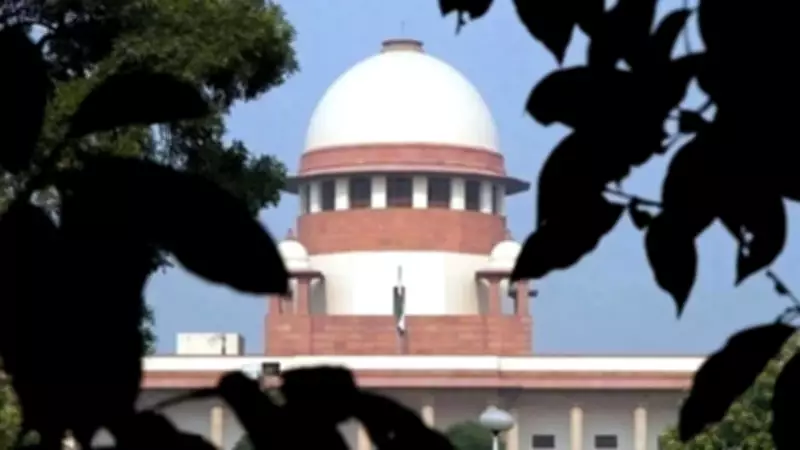
Supreme Court Emphasizes Scarcity of Public Employment, Excludes Grace and Compassion
The Supreme Court of India has delivered a significant ruling, highlighting the extreme scarcity of public employment opportunities in the country. In a recent statement, the court made it clear that concepts such as grace, charity, and compassion have no legitimate place in the process of filling these highly sought-after positions.
Judicial Bench Clarifies Stance on Employment Selection
A bench comprising Justices Dipankar Datta and Satish Chandra Sharma articulated this position, underscoring the competitive nature of public sector jobs. The justices noted that public employment is a scarce resource, with limited openings available relative to the vast number of applicants. This scarcity necessitates a strict, merit-based approach to selection, leaving no room for discretionary leniency or emotional considerations.
The bench elaborated, stating, "Public employment is scarce. The youth of the country eagerly await such employment opportunities, as and when the same are thrown open, with fervent hopes for a brighter future." This remark underscores the high stakes involved, as millions of young Indians pin their aspirations on securing these positions to improve their livelihoods and career prospects.

Implications for Youth and Employment Policies
This ruling has profound implications for how public employment is perceived and managed in India. By explicitly stating that grace, charity, and compassion are irrelevant, the court reinforces the principle that selection must be based solely on objective criteria, such as qualifications, performance in examinations, and adherence to established procedures. This approach aims to ensure fairness and transparency, preventing any form of favoritism or bias that could undermine the integrity of the recruitment process.
Furthermore, the court's emphasis on scarcity highlights the ongoing challenges in the job market, where demand for public sector roles far exceeds supply. This situation is particularly acute among the youth, who often view government jobs as stable and prestigious career options. The ruling serves as a reminder to policymakers and authorities to prioritize efficient and equitable distribution of these opportunities, while also addressing broader issues of unemployment and economic growth.
In summary, the Supreme Court's statement reinforces a meritocratic framework for public employment, stressing that in a context of limited openings, only strict adherence to rules and qualifications can ensure justice for all aspiring candidates. This perspective is likely to influence future legal and administrative decisions related to job recruitment in the public sector.