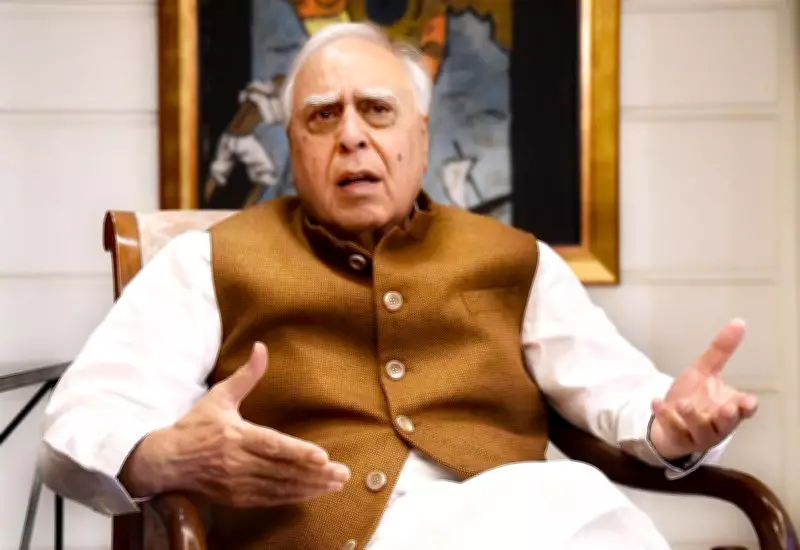
Senior advocate Kapil Sibal has asserted that the Supreme Court's order regarding the counting of votes in West Bengal has been misread by certain quarters. He clarified that the court's directive was not intended to be interpreted as a blanket endorsement of any particular process, but rather a nuanced legal stance that requires careful understanding.
Background of the Controversy
The controversy erupted after the Supreme Court issued an order related to the counting of votes in the West Bengal panchayat elections. The opposition parties alleged irregularities and demanded a recount, leading to a legal battle. The court's intervention was sought to ensure transparency and fairness in the electoral process.
Sibal's Clarification
Speaking to the media, Sibal emphasized that the Supreme Court's order was specific to the facts of the case and should not be misconstrued as a general principle. He warned against selective reading of court orders, which can lead to confusion and undermine the judicial process. Sibal, a former Union minister and senior lawyer, stressed that the court had not given a clean chit to any party but had merely laid down guidelines for the counting process.

Reactions from Political Parties
The ruling Trinamool Congress (TMC) welcomed the Supreme Court order, while the opposition Bharatiya Janata Party (BJP) and Congress expressed disappointment. BJP leaders claimed that the order validated their concerns about the electoral process, whereas TMC said it vindicated their stand. Sibal's remarks add a layer of legal interpretation to the political debate.
Legal Experts Weigh In
Several legal experts have echoed Sibal's view, stating that the Supreme Court's order was limited to the specific circumstances of the West Bengal case. They caution against drawing broad conclusions from the order and urge all parties to adhere to the court's directives without misrepresentation. The issue highlights the importance of legal literacy and the dangers of politicizing judicial pronouncements.
Implications for Future Elections
The Supreme Court's order and the subsequent debate have significant implications for the conduct of elections in India. The case underscores the need for robust mechanisms to ensure free and fair elections, particularly at the local level. Sibal's clarification serves as a reminder that court orders must be read in their entirety and contextualized within the legal framework.
As the political discourse continues, it remains to be seen how the various parties will interpret and implement the Supreme Court's directives. The focus should remain on upholding democratic principles and ensuring that the electoral process is beyond reproach.