Supreme Court Takes Up Disabled Veterans' Fight for Pension Justice
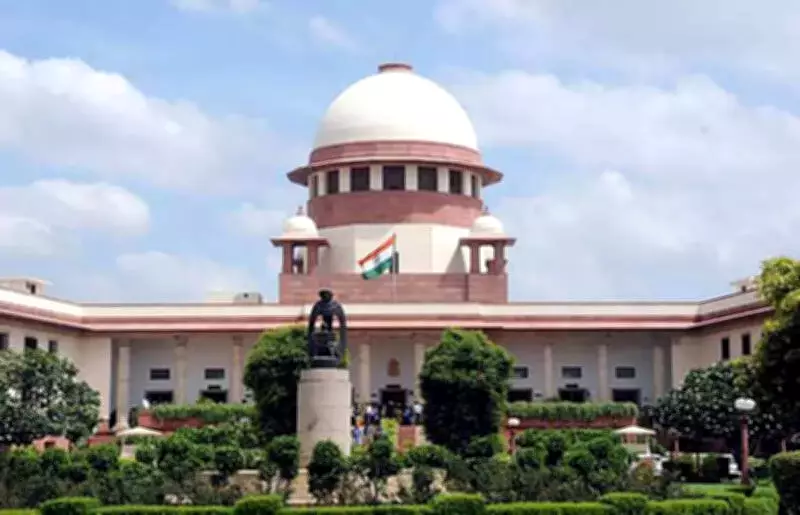
The Supreme Court of India has issued formal notice to the Central government and military authorities following a significant petition filed by two disabled ex-servicemen. The veterans allege years of systematic non-compliance with binding judicial orders regarding their rightful disability pensions, raising profound questions about institutional accountability and justice delivery for those who served the nation.
Chronicle of Institutional Apathy and Delayed Justice
The petition, filed by 66-year-old Army veterans Jarnail Singh and Jasbir Singh from Punjab, reveals a distressing pattern of administrative neglect. Both veterans secured favorable rulings from the Armed Forces Tribunal (AFT) Chandigarh bench in 2019 and 2021 for medical conditions incurred during military service. Despite these clear judicial mandates, they have been denied their lawful financial dues for over five continuous years.
During related proceedings before the Punjab and Haryana High Court, defence authorities disclosed a staggering backlog: over 3,200 execution cases arising from AFT orders remain pending nationwide. This revelation underscores what petitioners describe as "widespread administrative apathy" toward tribunal rulings affecting thousands of military veterans across India.

The Vicious Cycle of Litigation Without Relief
The disabled veterans have been trapped in an exhausting legal labyrinth, forced to pursue execution applications, writ petitions, and contempt proceedings—none of which have yielded the promised relief. Their petition paints a grim portrait of systemic delay where execution applications filed under Section 29 of the Armed Forces Tribunal Act, 2007, remain pending for years despite repeated judicial directives for time-bound disposal.
Legal counsel Rajesh Sehgal informed the apex court about a particularly telling instance: in August 2024, the high court directed the AFT to dispose of execution applications within four months. When this deadline passed without compliance, contempt petitions were filed, only to be adjourned repeatedly with new dates stretching into late 2025 and early 2026.
Supreme Court Precedents Ignored, Justice Delayed
The petitioners cited multiple Supreme Court judgments, including Bhoj Raj Garg versus Goyal Education and Welfare Society (2022) and Periyammal versus Rajamani (2025), which unequivocally state that execution proceedings must ordinarily be decided within six months. The continued violation of these binding precedents highlights what the veterans term "a denial of justice in slow motion."
A critical structural flaw exacerbates the problem: the Armed Forces Tribunal lacks contempt powers, which petitioners argue emboldens authorities to delay compliance by routinely filing appeals and review petitions, often long after statutory deadlines have expired. "The question is whether a disabled soldier will ever live to see the benefit of a court order passed in his favour," the petition poignantly states, warning that continued delays risk rendering judicial victories meaningless for ageing veterans.
Call for Immediate Remedial Action and Accountability
The petitioners have urged the Supreme Court to issue mandatory directions for immediate implementation of all pending AFT orders, along with appropriate interest, costs, and exemplary damages for what they describe as "wilful and prolonged defiance" of judicial authority. Their plea represents not just an individual grievance but a systemic challenge affecting military justice administration across India.
This case brings into sharp focus the broader institutional crisis facing disabled veterans who must navigate complex legal battles long after their military service has ended. The Supreme Court's intervention could establish crucial precedents for timely implementation of tribunal decisions and accountability mechanisms within defence administration.