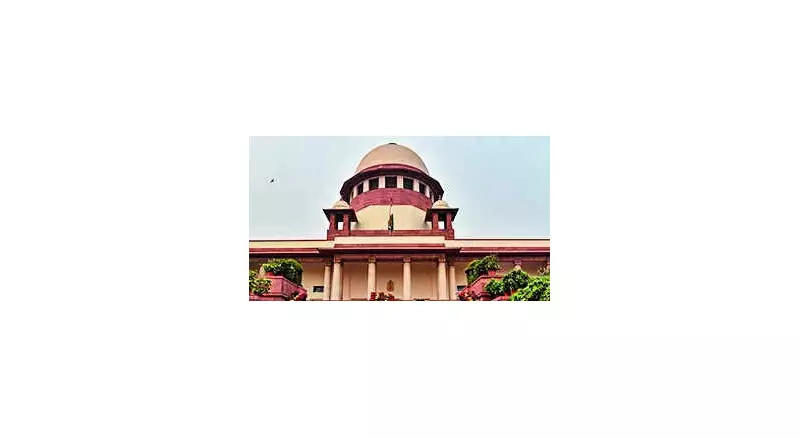
The Supreme Court of India on Tuesday delivered a firm stance on the issue of illegal immigration, stating that intruders and illegal migrants possess no legal rights within the country. The apex court emphasized that the nation's own impoverished citizens have the first claim over India's resources.
Court's Stance on Rights and Resources
While hearing a habeas corpus petition concerning five untraceable Rohingya illegal immigrants, a bench comprising Chief Justice of India Surya Kant and Justice Joymalya Bagchi clarified its position. The bench took strong exception when the petitioner's counsel, Rita Manchanda, referred to the Rohingyas as "refugees." Solicitor General Tushar Mehta strongly opposed the plea.
The CJI articulated that while the court adopts a humane approach, the primary rights belong to Indian citizens. "Once these illegal migrants are in India, they claim the right to food, shelter, and help for their children. We have many poor people in the country. They have a right over the country's resources, not the illegal migrants," CJI Surya Kant stated. He added that illegal migrants cannot be subjected to custodial torture.
Historical Context and Current Proceedings
The court's remarks resonate with a long-standing concern, notably highlighted in its 2005 judgment in the Sarbananda Sonowal case. In that landmark ruling, the SC had declared that Assam was facing "external aggression and internal disturbance" due to large-scale illegal migration from Bangladesh, invoking the Union's duty under Article 355 of the Constitution.
During the hearing, Solicitor General Tushar Mehta argued that the habeas corpus petition was a guise to seek details on deportation processes, diplomatic talks, and confidential files regarding Rohingya immigrants. The bench has adjourned the hearing to December 16, when other connected matters concerning Rohingya illegal migrants will be taken up.
Broader Implications and Past Refusals
The court's position comes amid growing calls from some quarters to recognize Rohingyas—Muslims from Myanmar's Rakhine state who are not considered citizens by the junta—as refugees. Many have entered India via Bangladesh into states like West Bengal.
This is not the first time the court has held this line. On May 8, a bench including Justices Kant, Dipankar Datta, and N Kotiswar Singh had refused to stay the purported deportation of illegal Rohingya immigrants from Delhi. The bench had then clarified that the right to reside anywhere in India is a privilege reserved for citizens, and foreigners are governed by the Foreigners Act.
The Supreme Court's consistent view underscores a complex balance between humanitarian considerations and the strict enforcement of sovereignty and immigration laws, firmly prioritizing the rights of the nation's own citizens.