Supreme Court Justice Advocates for Inclusive Judiciary as "Rainbow Institution"
In a powerful address delivered at the Telangana Judicial Academy in Hyderabad on Saturday, Supreme Court Justice Ujjal Bhuyan emphasized the urgent need for the judiciary to transform into an inclusive "rainbow institution" that genuinely reflects India's vast diversity. He stressed that the courts must move beyond being dominated by a single gender or specific communities to become truly representative of all sections of society.
Constitutional Morality Must Override Cultural Prejudices
Justice Bhuyan, delivering the keynote speech on constitutional morality and the role of district judiciary, explicitly stated his vision to see transgender individuals and sexual minorities serving as judges in India's courtrooms. He highlighted his personal experience as Telangana Chief Justice, where he and Justice CV Bhaskar Reddy declared the archaic Telangana Eunuchs Act of 1919 unconstitutional in 2023.
The 1919 Act, which mandated eunuchs to register with authorities and provide residence details under suspicion of kidnapping boys, also permitted arrests without warrants. Justice Bhuyan asserted that such discriminatory laws violate constitutional morality, which must always supersede cultural prejudices and stereotypes that have long marginalized LGBT communities.
District Judiciary as the Backbone of Justice System
Addressing judicial officers from across Telangana, Justice Bhuyan described the district judiciary as the fundamental backbone of India's legal system and the primary interface between citizens and justice. He emphasized that justice must not only be done but must be visibly seen to be done, ensuring public trust and confidence.
He specifically referenced Article 227, characterizing it as a "shield, not a sword," which positions high courts as mentors rather than mere appellate authorities. This approach, he argued, strengthens the lower judiciary while maintaining necessary oversight.
Illustrating Persistent Societal Fault Lines
To underscore the deep-seated societal divisions that persist, Justice Bhuyan cited two poignant examples: a 2025 incident in Delhi where his daughter's friend, a PhD student, was denied housing due to her community background, and a recent protest in Odisha against a Dalit woman preparing midday meals.
"These incidents represent just the tip of the iceberg," he remarked, "revealing the societal fault lines that continue to exist even after 75 years of Independence."
Celebrating Judicial Icons and Overcoming Barriers
Justice Bhuyan highlighted several judicial luminaries who began their careers in trial courts, including Justices Hansraj Khanna, AM Ahmadi, and M Fathima Beevi. He made special mention of Kanya Nathan, who topped the Kerala civil judge examination despite visual impairment, following a landmark 2025 Supreme Court ruling that impairment does not disqualify candidates from judicial service.
Addressing Accessibility and Legal Literacy Challenges
The Supreme Court justice also urged the judiciary to confront the "metaphorical distance" created by high legal fees and widespread legal illiteracy. He noted common public confusion between bail grants and acquittals, emphasizing the need for clearer communication and greater accessibility.
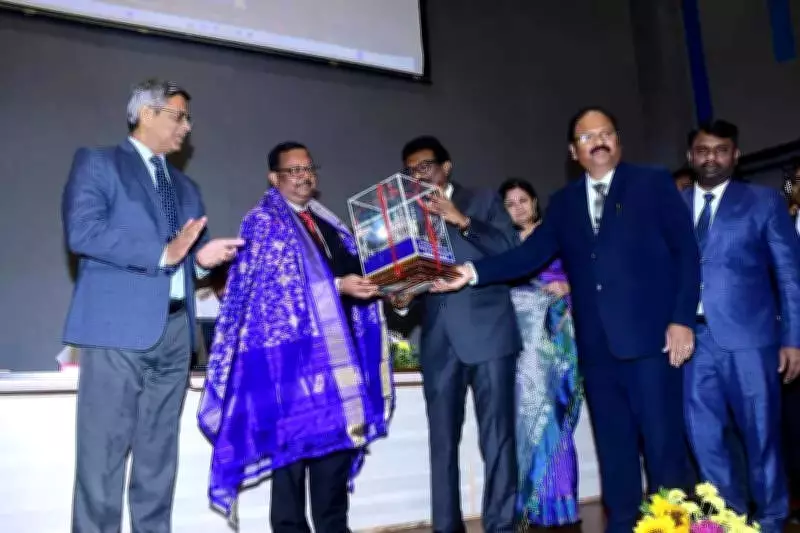
Concluding his address, Justice Bhuyan expressed gratitude to the Telangana judicial fraternity for their openness, calling Hyderabad his second home. The event saw participation from judges of the Telangana High Court, members of the Telangana Judges' Association, and the Academy Board of Governors, all gathered to reflect on these critical issues facing India's judicial system.