

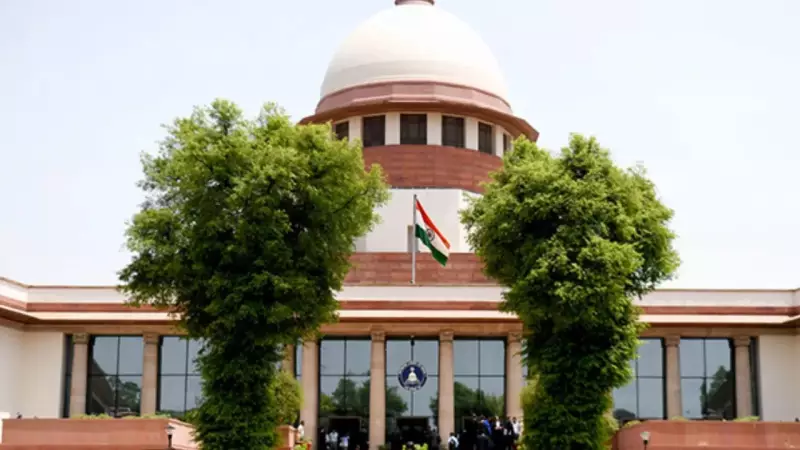
Supreme Court Upholds Judicial Ethics: Judges Cannot Adjudicate Their Own Cases
The Supreme Court of India has delivered a landmark ruling emphasizing that judicial officers, like all individuals, cannot act as judges in their own causes. Citing the age-old legal maxim 'No man shall be a judge in his own cause', the apex court clarified that this principle applies equally to members of the judiciary. This significant judgment brings closure to a protracted legal tussle between a railway magistrate and the Northern Railways administration concerning the provision of staff for conducting ticket checks.
Background of the Railway Magistrate's Case
The controversy originated when a Special Railway Magistrate (SRM) stationed in Ambala initiated proceedings against the railway administration and its officials. The magistrate had issued a showcause notice, alleging that the Northern Railways failed to provide the requisite staff necessary for performing 'magisterial checks' on railway premises. These checks are crucial for detecting passengers travelling without tickets and penalizing offenders under the provisions of the Railways Act.
Frustrated by the lack of manpower, the SRM contended that this omission constituted a prima facie case of interference with his judicial functions. Consequently, he not only served the showcause notice but also lodged a formal complaint with the Chief Judicial Magistrate in Ambala, seeking trial against the concerned railway official.

Legal Journey Through the Courts
In response, the railways administration and the Senior Divisional Commercial Manager of Northern Railways approached the Punjab and Haryana High Court, challenging the magistrate's actions. The High Court, however, rejected their plea, asserting that the withdrawal of checking staff was unfair and reprimandable. It directed the railway authorities to make the necessary staff available, emphasizing that no railway authority possessed the power to oust the jurisdiction of the Special Railway Magistrate in such matters.
Dissatisfied with this outcome, the appellants escalated the matter to the Supreme Court. A bench comprising Justices M M Sundresh and N K Singh meticulously reviewed the case, ultimately reversing the High Court's order that had favored the railway magistrate.
Supreme Court's Decisive Reasoning
The Supreme Court bench articulated a clear and principled stance. It observed, "It is a case where the learned railway magistrate wants to become a judge of his own cause." The Court elaborated that the communication sent by the magistrate to the railway official could not be classified as a judicial proceeding. Furthermore, it noted that the appellants had not acted beyond their official capacities in this dispute.
By quashing the proceedings initiated by the magistrate, the Supreme Court effectively put an end to the judiciary-railways tug-of-war. The ruling underscores that judicial officers must recuse themselves from matters where they have a personal interest, thereby upholding the integrity and impartiality of the judicial process.
Implications of the Judgment
This verdict reinforces foundational principles of natural justice and judicial ethics within the Indian legal framework. It serves as a reminder that the judiciary itself is bound by the very laws and ethical standards it upholds. The decision not only resolves the specific manpower dispute but also sets a precedent for similar cases, ensuring that the sanctity of judicial proceedings remains uncompromised.
The Supreme Court's intervention highlights the importance of maintaining clear boundaries between personal grievances and official judicial functions, thereby preserving public trust in the legal system.






