








Politics

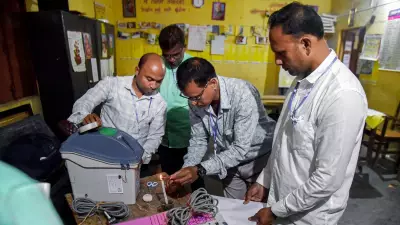
Calcutta High Court: No Orders Against Poll Officers Till April 29
Calcutta High Court has directed that no coercive orders be issued against any officer on election duty until April 29, following a verbal plea by a lawyer.





World

Indian Family's Canadian Dream Ends: Returns After Job Loss, Visa Woes
An Indian family's move to Canada for a better life unravels after a job loss and tightening immigration rules, forcing their return to Bengaluru after three years.



Entertainment

Remo D'Souza and Wife Lizelle's Unconventional Love Story: Live-In, Pregnancy Before Marriage
Remo D'Souza and Lizelle share their journey of love, live-in, and parenthood before marriage, overcoming family disapproval and societal taboos.



Business

Sensex drops 417 pts, Nifty ends below 24,000 amid oil price surge, FII outflows
Benchmark indices Sensex and Nifty ended lower on Tuesday as rising crude oil prices and continued foreign fund outflows dampened investor sentiment. Brent crude jumped nearly 3% to $111.4 per barrel.






Lifestyle





Technology

Vivo Y600 Pro Launched with 10,200mAh Battery and 50MP Camera
Vivo has launched the Y600 Pro featuring a massive 10,200mAh battery and a 50MP camera. The phone offers long battery life and impressive photography capabilities at an affordable price.

Extreme Fasting May Harm Heart Health, New Research Warns
New research warns that extreme fasting, like 8-hour eating windows, may increase cardiovascular death risk by up to 91%. Experts advise a balanced, medically guided approach.

CM Naidu Urges Google to Complete AI Hub 3–6 Months Early
Andhra Pradesh CM N Chandrababu Naidu urged Google and partners to complete the AI Hub in Visakhapatnam 3–6 months ahead of schedule, aiming to integrate innovation with governance.

Oppo F33 Pro Review: Design, Battery, and Selfie Camera
Oppo F33 Pro offers a premium design, military-grade durability, IP69K rating, 7000mAh battery, and a 50MP ultrawide selfie camera. Starting at Rs 37,999, it excels in battery life and selfies.

AI Fears Drive College Students to Change Majors
Many college students are switching majors due to AI concerns, focusing on critical thinking and interpersonal skills over technical skills that can be automated.
