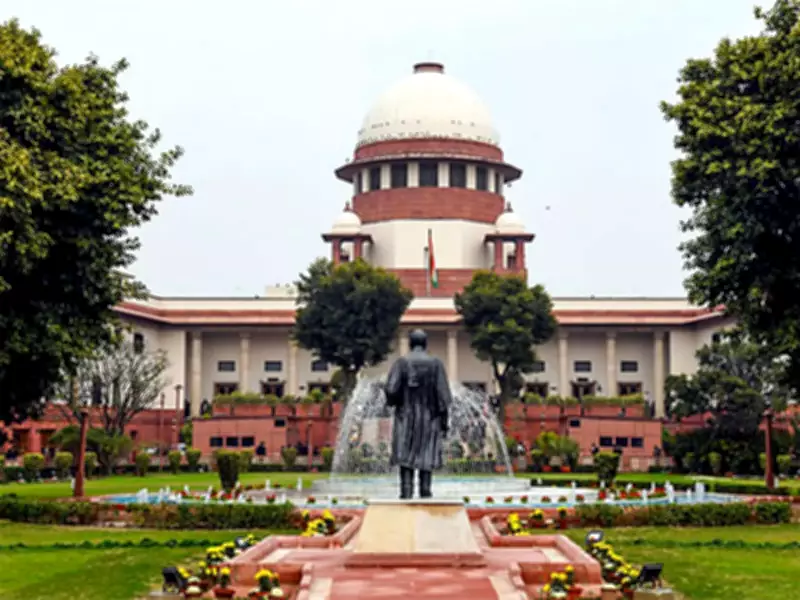
Supreme Court Delivers Landmark Ruling on Sexual Offences
In a significant judgment, the Supreme Court of India on Tuesday categorically ruled that groping a female and untying her pyjama string constitutes "attempt to rape," thereby setting aside a controversial Allahabad High Court verdict that had termed such acts merely as "preparation to commit rape." This distinction is crucial as "attempt to rape" attracts far more stringent punishment compared to the lesser charge of outraging the modesty of a woman, which the High Court had applied.
Overturning a Controversial High Court Decision
The Supreme Court bench, comprising Chief Justice Surya Kant and Justices Joymalya Bagchi and N V Anjaria, took suo motu cognisance of the case following widespread outrage over the Allahabad High Court's March 17, 2025, judgment. The apex court acted after receiving a letter from the NGO 'We the Women,' represented by its founder president and senior advocate Shobha Gupta. The bench decisively set aside the High Court's ruling and reinstated the original stringent charge of attempt to rape against the two accused under the Protection of Children from Sexual Offences (POCSO) Act.
Emphasizing Judicial Sensitivity and Compassion
During the proceedings, senior advocates Shobha Gupta and H S Phoolka passionately argued for greater sensitivity among judges when handling sexual offences against women. In response, the Supreme Court bench underscored that "no judge or judgment of any court can be expected to do complete justice when it is inconsiderate towards the factual realities of a litigant and the vulnerabilities which they may be facing in approaching a court of law."
Writing the judgment, Chief Justice Surya Kant elaborated that judicial efforts "must not only be grounded in the sound application of constitutional and legal principles but also foster an environment of compassion and empathy. The absence of either of these cornerstones would prevent judicial institutions from properly performing their critical duties."
The bench further articulated that "our decisions as participants in the legal process, from laying down the procedure that shall have to be faced by common citizens to the final judgment passed in any given case, must reflect the ethos of compassion, humanity and understanding, which are essential for creating a fair and effective justice system."
Guidelines for Judicial Sensitivity in Vulnerable Cases
While the Supreme Court acknowledged that it had previously laid down principles to sensitize judges, it refrained from adopting an open-ended approach to devise fresh guidelines without proper guidance. Instead, the court requested Justice Aniruddha Bose, Director of the National Judicial Academy, to constitute a committee of experts. This committee is tasked with preparing a "comprehensive report" on 'Developing Guidelines to Inculcate Sensitivity and Compassion into Judges and Judicial Processes in the Context of Sexual Offences and other Vulnerable Cases.'
The CJI-led bench specifically noted that "the guidelines, we expect, will not be loaded with heavy, complicated expressions borne from foreign languages and jurisdictions." This remark subtly referenced the bench's earlier criticism of former CJI D Y Chandrachud's 'Handbook on Combating Gender Stereotypes,' which it had deemed too "Harvard-oriented."
This landmark ruling not only corrects a legal misinterpretation but also reinforces the judiciary's commitment to a more empathetic and just approach in cases involving sexual violence, ensuring that victims receive the protection and justice they deserve under the law.