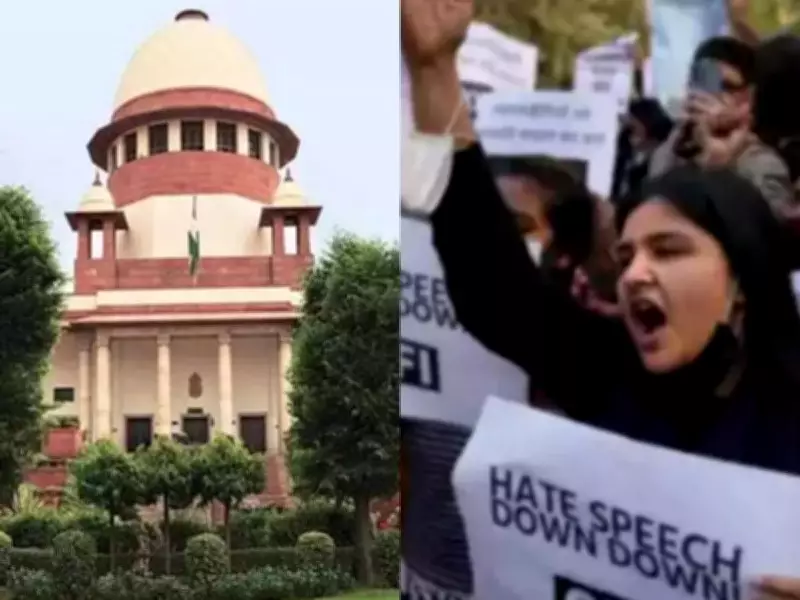
Supreme Court Criticizes PIL Targeting BJP Chief Ministers, Demands Impartial Approach
The Supreme Court of India, on Tuesday, delivered sharp criticism against a group of twelve eminent individuals who collectively filed a Public Interest Litigation (PIL) that specifically targeted chief ministers from Bharatiya Janata Party (BJP)-governed states. The petitioners had alleged hate speeches by these constitutional functionaries and sought the framing of guidelines to restrain them and bureaucrats from breaching fidelity to constitutional morality.
Bench Questions Selective Targeting in Petition
Appearing for the petitioners, senior advocate Kapil Sibal presented arguments before a bench comprising Chief Justice Surya Kant and Justices BV Nagarathna and Joymalya Bagchi. Sibal contended that the country's atmosphere had become toxic and asserted that only the Supreme Court could and should remedy this situation.
However, the CJI-led bench was quick to point out the selective nature of the petition. "This petition is definitely targeting certain individuals as it leaves out others who routinely make such hate speeches. Let the petitioners not create an impression that it is targeting certain individuals," the bench remarked, highlighting the need for an impartial approach.
Petitioners Cite Alleged Hate Speeches by BJP Leaders
The petitioners, including notable figures such as Roop Rekha Verma, Mohd Adeep, Harsh Mander, Najeeb Jung, John Dayal, and Ashok Kumar Sharma, had cited alleged hate speeches by several BJP leaders. These included Himanta Biswa Sarma, Yogi Adityanath, Devendra Fadnavis, Pushkar Singh Dhami, Anantkumar Hegde, and Giriraj Singh, along with certain remarks by some bureaucrats.
In response, the bench emphasized the importance of neutrality. "Come with an impartial and neutral petition. The issue is important. Ultimately, there must be restraint in speech from all sides. We would like to say all political party functionaries must be mindful of constitutional morality and exercise restraint in their speeches, and any guideline should be applicable across the board," stated Chief Justice Surya Kant.
Court Highlights Need for Universal Application of Guidelines
The bench further noted that there are political parties which brazenly make speeches based on communal ideology and openly profess hatred. "You have not cited a single example from the other side," the bench pointed out, underscoring the necessity for a balanced petition that addresses hate speech from all political spectrums.
Following this, Kapil Sibal offered to delete all references to individuals in the petition. The bench agreed to hear the PIL after the necessary amendments are carried out, granting Sibal two weeks to make these changes.
Judicial Observations on Constitutional Morality and Free Speech
Justice BV Nagarathna shared insightful observations on the matter. "Political party leaders must foster fraternity. Courts can pass orders. But the remedy lies in political parties and democratic institutions living up to constitutional values and morality," she stated. Justice Nagarathna also raised a critical question regarding free speech: "The origin of speech is the thought process. Can by court order the thought process of a person be altered or restricted? What about free speech?"
Justice Joymalya Bagchi added his perspective, telling Sibal, "It is such a vague petition. Instead of it being a populist exercise, let it be a constructive constitutional exercise. Humdrum of politics should not dictate the filing of the PIL."
Core Prayers of the Petition
The two primary prayers of the petitioners were outlined as fundamental duties of a citizen:
- A declaration that public speeches of constitutional functionaries or holders of public office are subject to constitutional morality and should not violate the fundamental rights of others.
- The formulation of guidelines to govern public speech by constitutional functionaries and bureaucrats to ensure fidelity to constitutional morality, without imposing prior restraint or censorship.
This case highlights the ongoing judicial scrutiny of hate speech in Indian politics and the Supreme Court's insistence on impartiality and universal application in addressing such critical constitutional issues.