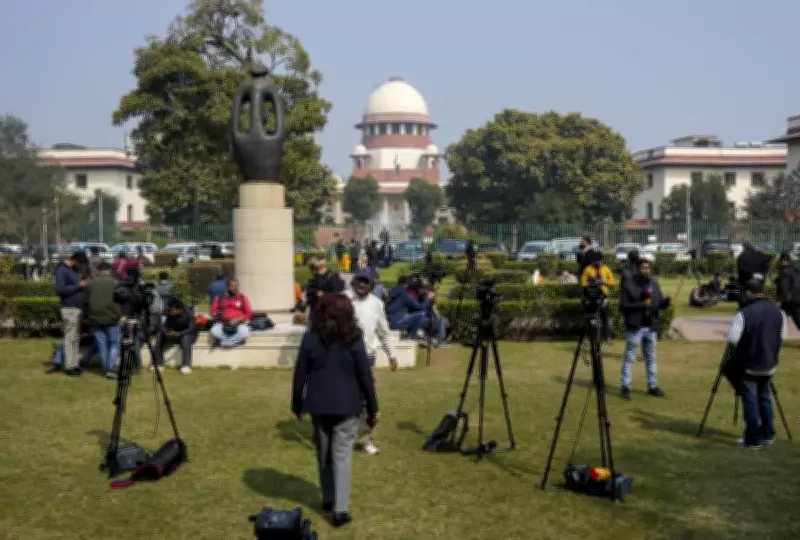
Supreme Court Rejects Haryana's Zoo Safari Plan in Aravalli Forest
The Supreme Court of India has taken a firm stand to protect the Aravalli forest range, refusing to grant permission for a proposed zoo safari project by the Haryana government. In a decisive ruling, the court emphasized that it will not allow any entity to compromise the ecological integrity of this vital natural habitat.
Court's Unwavering Commitment to Environmental Preservation
During the proceedings, the bench made it unequivocally clear that the Aravalli forest is an indispensable ecological asset that requires absolute protection. The judges stated that they are committed to safeguarding this region from any developmental activities that could potentially degrade its environmental value or disturb its delicate wildlife ecosystems.
The proposed zoo safari project, which was planned for implementation by 2026, has now been effectively halted by this judicial intervention. This decision underscores the judiciary's role in balancing development with environmental conservation, particularly in sensitive areas like the Aravalli range.

Details of the Haryana Government's Proposal
The Haryana government had submitted plans for establishing a zoo safari within the Aravalli forest area, aiming to create a tourist attraction while potentially generating revenue. However, environmental activists and conservation groups raised serious concerns about the impact such a project would have on the native flora and fauna.
The Aravalli range, one of the oldest mountain systems in the world, serves as a crucial green lung for the National Capital Region and supports diverse wildlife species. Conservationists argued that introducing a zoo safari could disrupt natural habitats, increase human-wildlife conflict, and lead to irreversible ecological damage.
Broader Implications for Forest Conservation in India
This Supreme Court decision sets a significant precedent for environmental jurisprudence in India. It reinforces the principle that ecologically sensitive areas must be protected from commercial exploitation, even when proposed by state governments. The ruling aligns with India's commitments to biodiversity conservation and sustainable development goals.
The court's stance sends a clear message to all state governments and private entities that projects affecting protected forests will face rigorous judicial scrutiny. This is particularly relevant as India continues to grapple with balancing economic development with environmental preservation.
Reactions and Future Outlook
Environmental organizations have welcomed the Supreme Court's decision, praising it as a victory for forest conservation. They emphasize that the Aravalli range requires protection not just for wildlife, but also for its role in groundwater recharge, climate regulation, and as a barrier against desertification.
The Haryana government must now reconsider its approach to tourism development in the region, potentially exploring alternatives that don't compromise forest ecosystems. This ruling may influence similar proposals in other ecologically sensitive areas across the country, encouraging more environmentally sustainable approaches to tourism and development.