Supreme Court Mandates Sweeping Road Safety Reforms Across India
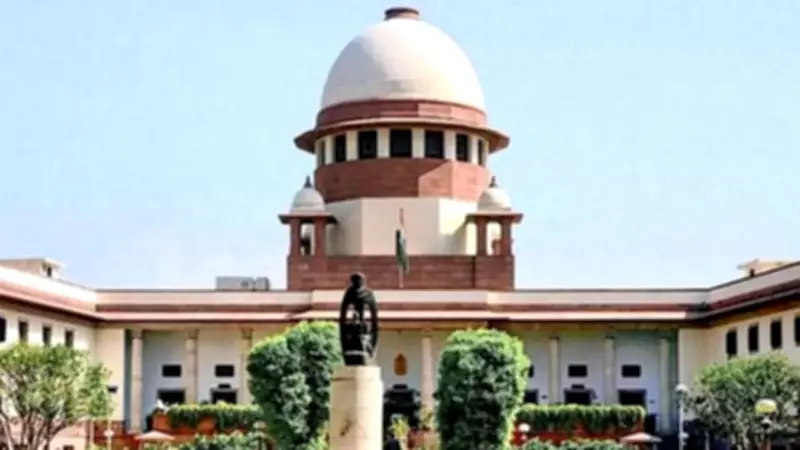
The Supreme Court of India has issued a series of comprehensive and far-reaching directives aimed at drastically improving road safety nationwide. In a landmark order, the court has explicitly banned the parking of heavy and commercial vehicles on national highways, warning that these vital transport corridors must not be allowed to transform into "corridors of peril" due to administrative failures or infrastructural deficiencies.
Court Links Road Safety to Fundamental Right to Life
A bench comprising Justices J K Maheshwari and Atul S Chandurkar delivered the powerful judgment, noting a critical statistic: national highways constitute merely 2% of India's total road network, yet they are responsible for nearly 30% of all road fatalities in the country. The court underscored that each preventable death on these roads represents a profound failure of the State's duty to protect its citizens.
"The loss of even a single life to avoidable hazards such as illegal parking or accident blackspots signifies a failure of the State's protective umbrella," the court stated in its order dated April 13. The bench directly connected the imperative of road safety to the constitutional Right to Life guaranteed under Article 21.

Elaborating further, the court added, "The 'Right to Life' enshrined under Article 21 of the Constitution of India is not merely a guarantee against the unlawful taking of life, but a positive mandate upon the State to ensure a safe environment where human life is preserved and valued."
Comprehensive Ban on Highway Parking and Strict Enforcement
The court has issued a clear directive that no heavy or commercial vehicle shall be permitted to stop or park on any national highway carriageway or its paved shoulder. The only exceptions are officially designated parking bays or lay-bys. To ensure strict compliance, enforcement will be carried out through modern technological systems.
- Advanced Traffic Management Systems (ATMS) will be deployed for monitoring.
- GPS-based photographic evidence will be utilized for verification.
- The eChallan mechanism will be employed for issuing penalties.
Authorities including the Ministry of Road Transport and Highways, the National Highways Authority of India (NHAI), state police departments, and state transport departments have been instructed to ensure full compliance with these orders within a strict timeframe of 60 days. Furthermore, District Magistrates have been tasked with establishing detailed Standard Operating Procedures for regular inspections and highway patrolling.
Crackdown on Illegal Roadside Structures and New Approvals
In a significant move to clear obstructions, the court has ordered an immediate prohibition on the construction or operation of new dhabas, eateries, or any commercial structures within the right of way of national highways. All existing unauthorized structures must be identified and removed within the same 60-day period.
The bench also directed that no new licenses or approvals shall be granted for any establishments within designated highway safety zones without obtaining explicit clearance from the NHAI or the Public Works Department. Additionally, a review of all existing licenses for such roadside establishments must be completed within 30 days to ensure they comply with safety norms.
Establishment of Task Forces and Blackspot Remediation
To institutionalize road safety efforts, the Supreme Court has mandated the creation of district-level Highway Safety Task Forces within 15 days. These task forces will comprise officials from the local administration, police, NHAI, and municipal bodies, ensuring a coordinated multi-agency approach.

- The court has called for enhanced surveillance and improved lighting at identified accident-prone areas, commonly known as "blackspots."
- Development of adequate truck lay-bys and robust emergency response systems along highways has been emphasized.
These sweeping directions were issued in a suo motu case initiated by the court following tragic accidents in Rajasthan and Telangana in November 2025, which claimed 34 lives and exposed systemic negligence in road safety management. The Central Government has been asked to submit a detailed compliance report within 75 days, and the court has scheduled the next hearing on the matter after two months.