Orissa High Court Overturns NGT's Rs 1.20 Crore Environmental Compensation Directive
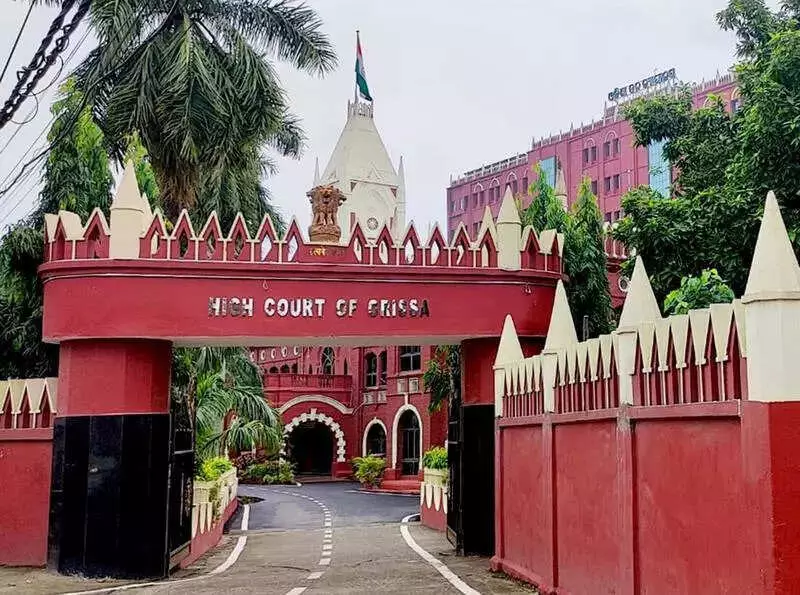
The Orissa High Court has set aside a significant order from the National Green Tribunal (NGT) that had directed the recovery of Rs 1.20 crore in environmental compensation from a construction company involved in railway track and bridge works for the East Coast Railway (ECoR). The court's decision, delivered on January 22, 2025, by a bench led by Justice S K Panigrahi, emphasized that the NGT proceedings suffered from a fundamental breach of natural justice, rendering the directive unsustainable.
Court Cites Denial of Fair Hearing as Key Ground
In its detailed order, the High Court quashed the NGT's directive dated May 2, 2025, observing that the construction company was denied a crucial opportunity to be heard before adverse findings were acted upon. Justice Panigrahi highlighted that directions stemming from a procedurally flawed process could not be upheld, reinforcing the importance of judicial integrity in environmental matters.
The company had argued before the High Court that it was neither formally included in the NGT proceedings nor provided notice of the site inspection. Additionally, it was not given a chance to contest the inquiry committee's report. Justice Panigrahi concurred with these contentions, stating that the procedure violated the established legal principle of audi alteram partem (hearing the other side). The court further criticized the NGT for what it described as an impermissible abdication of its judicial role by merely rubber-stamping the committee's report without independent scrutiny.
Background of the Dispute and NGT's Actions
The dispute originated when individuals identifying themselves as social workers and local villagers approached the NGT's eastern zone bench in Kolkata. They alleged illegal extraction of minor minerals, such as earth and morrum, from government land in the Tangi-Choudwar tehsil of Cuttack district for a railway project. The construction company had been awarded the work through a letter of acceptance on June 1, 2022, followed by a formal contract on October 25 of the same year.
In response to the complaint, the NGT constituted a joint committee on November 23, 2023. This committee included officials from the Odisha State Pollution Control Board (OSPCB), district administration, mining, and forest departments. Their mandate was to inspect the site and recommend penalties, environmental compensation, and remedial measures.
Committee's Findings and Subsequent Legal Challenges
The joint committee inspected the area on December 18, 2023, noting evidence of excavation and water-filled pits. However, they recorded that the full depth and quantity of the extraction could not be accurately assessed at that time. A subsequent report, prepared by the district mining officer, was relied upon to recommend environmental compensation exceeding Rs 1.20 crore.
According to case records, although the NGT directed the recovery of this compensation after purportedly giving the petitioner a full hearing opportunity, the OSPCB had not initiated any recovery steps by the time the petitioner approached the High Court. This delay allowed the company to challenge the NGT's order on procedural grounds, ultimately leading to the High Court's intervention.
Implications for Environmental Justice and Legal Procedures
This ruling underscores the critical balance between environmental protection and procedural fairness in legal proceedings. By emphasizing the necessity of a fair hearing, the Orissa High Court has reinforced that judicial bodies like the NGT must adhere strictly to principles of natural justice, even in cases involving significant environmental concerns. The decision may set a precedent for future cases, highlighting that procedural lapses can invalidate otherwise substantive environmental directives.
The case serves as a reminder to regulatory authorities and courts alike to ensure that all parties are afforded adequate opportunities to present their cases, thereby upholding the rule of law in India's evolving environmental jurisprudence.