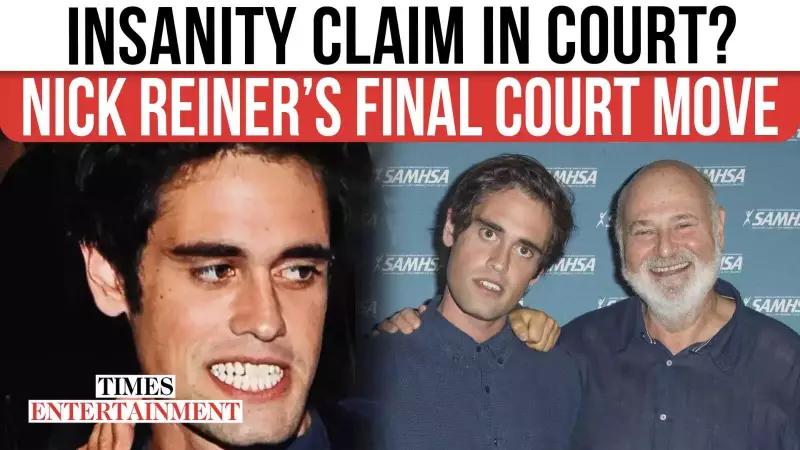
The high-profile murder case involving Nick Reiner, the son of legendary filmmaker Rob Reiner and his wife Michele, is taking a complex legal turn. As the accused faces charges for the brutal deaths of his parents, his defense team is reportedly considering an insanity plea. However, legal experts warn that this strategy could be an uphill battle in court, fraught with significant challenges.
The Steep Climb for an Insanity Defense
Attorneys familiar with such cases point out that juries are historically reluctant to accept insanity claims. The legal standard for proving insanity is exceptionally high. The defense must convincingly demonstrate that at the time of the crime, the defendant was unable to understand the nature of their actions or could not distinguish right from wrong. This is a formidable burden of proof, often requiring extensive psychiatric evaluation and testimony that can be rigorously challenged by prosecutors.
In Nick Reiner's situation, this challenge is compounded by several factors reported in the case. These include alleged family tensions, a possible motive, and his documented behavior following the killings. Prosecutors are likely to use these elements to argue that his actions were deliberate and calculated, rather than the product of a mind that had lost touch with reality. The reported details of the blood-soaked crime scene further intensify the graphic nature of the allegations, potentially influencing a jury's perception.

Mental Health History and Legal Strategy
While Nick Reiner's mental health history will be a central part of the defense's argument, it is not a guaranteed path to an acquittal on grounds of insanity. The court will scrutinize whether his condition at the exact moment of the murders met the strict legal definition. Past struggles or diagnoses alone are often insufficient. The defense must create a direct, irrefutable link between his psychological state and the criminal act.
Furthermore, the timing and nature of the plea are critical. An insanity defense is a high-risk strategy. If unsuccessful, it can undermine other potential defense arguments and may even affect sentencing. With the case attracting massive media attention, every legal maneuver is under a microscope, adding pressure on both the defense and prosecution teams.
A Life-or-Death Courtroom Fight
The stakes in this trial could not be higher. Nick Reiner is effectively engaged in a life-or-death courtroom fight. The charges carry the potential for severe penalties, making the choice of defense strategy paramount. Legal analysts suggest that the defense faces staggering hurdles in convincing a jury to deliver a verdict of not guilty by reason of insanity.
The case has sent shockwaves through Hollywood and beyond, with friends like Martin Scorsese paying public tribute to the victims. As the legal process unfolds, the world will be watching to see if an insanity plea can succeed against the weight of the evidence and the inherent skepticism of the justice system towards such defenses. The outcome will hinge on a complex interplay of psychiatry, law, and the powerful narrative presented by both sides in court.