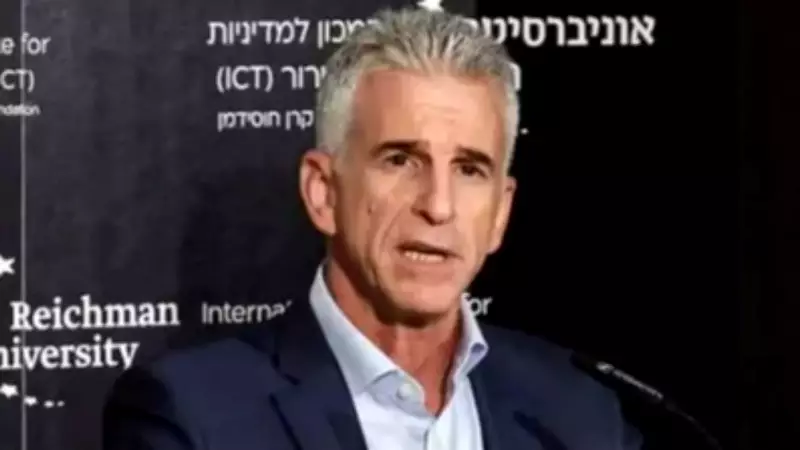
Mossad Chief's Cautious Timeline for Iranian Regime Change Emerges in Report
A recent report has shed light on Mossad chief David Barnea's nuanced assessment regarding the potential for regime change in Iran, presented to Israel's cabinet before the outbreak of war. According to The Jerusalem Post, Barnea outlined multiple scenarios, with the most likely estimate suggesting that toppling the Iranian regime could take approximately one year, rather than just days or weeks as some earlier anonymous accounts had implied.
Qualified Intelligence Assessment Versus Earlier Portrayals
The report emphasizes that Barnea's position was more qualified than later portrayals indicated. He did not present regime change as inevitable but as a possibility dependent on several conditions, including achieving key military goals such as decapitating leadership, damaging regime institutions, and weakening its ability to repress citizens. Barnea is known for attaching caveats to major intelligence assessments, and any pitch to Israeli Prime Minister Benjamin Netanyahu or U.S. officials would have been tightly controlled within broader government strategy.
This contrasts sharply with earlier reports, such as one from The New York Times, which claimed Barnea had told Netanyahu and senior Trump administration officials in mid-January that Mossad could potentially help galvanize the Iranian opposition within days of the war's beginning, triggering riots and rebellion that might lead to government collapse. However, three weeks into the conflict, no such uprising had materialized, and U.S.-Israeli intelligence assessments concluded the Iranian regime was weakened but still intact.

Public Messaging and Current Assessments
In public statements, both Netanyahu and then-U.S. President Donald Trump initially hinted that military action could create conditions for regime change, but they also stressed that the Iranian people themselves would need to act. Since then, messaging has become more restrained. U.S. Director of National Intelligence Tulsi Gabbard stated that the U.S. intelligence community assesses the Iranian regime "appears to be intact, but largely degraded." Netanyahu has similarly tempered expectations, saying Israel is working to "create the conditions" for the regime to fall but added, "it may survive, it may not. If it survives, it'll be a lot weaker."
The report from The Times of Israel, citing Channel 12, reinforced Barnea's cautious approach, noting he offered "disclaimers and qualifications" and stressed the fluid nature of the situation, with achieving regime change likely taking a long time. This more measured assessment has been obscured by recent anonymous attacks accusing Barnea of overselling the chances of a rapid collapse.
Broader Context and Regional Developments
Amid these intelligence revelations, the conflict has seen broader regional implications. Gulf allies like Saudi Arabia and the UAE have edged toward involvement, with Saudi granting U.S. base access and the UAE shutting Iranian assets. Additionally, there have been disruptions such as Amazon Web Services experiencing issues following a drone attack in Bahrain, and oil prices have tumbled amid the volatile situation. Possible U.S.-Iran talks in Islamabad have been discussed, with the White House describing the situation as "sensitive" and "fluid."
This report underscores the complexity and uncertainty surrounding the war with Iran, highlighting the gap between optimistic early projections and the more realistic, time-intensive assessments provided by intelligence leaders like Barnea.