Morbi Municipal Corporation Withdraws Slum Demolition Order Following High Court Petition
In a significant development, the Morbi Municipal Corporation has decided to withdraw its demolition order for a slum located on Panchasar Road. This decision came after 115 residents of the slum approached the Gujarat High Court, filing a petition that challenged the civic body's move to remove them without providing any alternative accommodation.
Decades of Residence and Historical Recognition
The slum-dwellers, in their petition, asserted that they have been living in the area for several decades. Their presence on the land was officially acknowledged by the government during the Machchhu floods in 1979. Since that time, they have been actively requesting the government to regularize their settlement, seeking legal recognition and stability for their homes.
Cooperation During Road-Widening and Subsequent Notices
Between 2020 and 2023, the municipality undertook a road-widening drive on Panchasar Road. The slum residents cooperated fully with this initiative by voluntarily removing portions of their structures that fell within the designated road line. However, after a couple of notices, the junior town planner issued orders on March 17 under the provisions of the Gujarat Provincial Municipal Corporation (GPMC) Act. These orders directed the residents to remove their constructions within seven days and threatened demolition if they failed to comply by March 24. Notably, the authority refused to entertain any replies or objections to this order, leaving the residents with no recourse.

High Court Petition and Allegations of Injustice
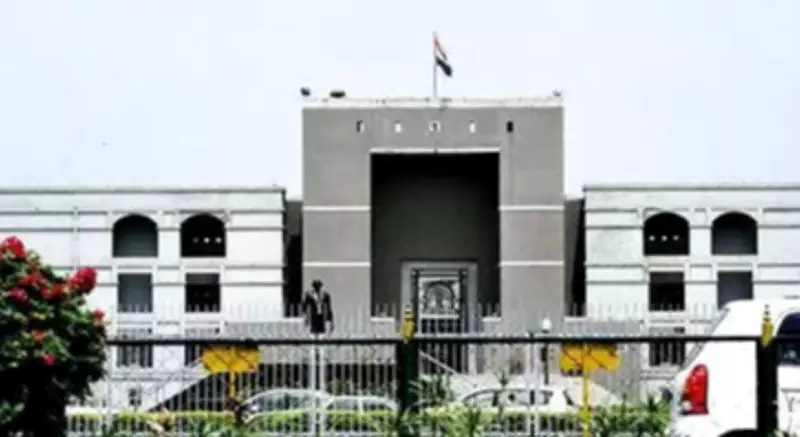
Faced with this imminent threat, the petitioners moved the Gujarat High Court. They alleged that the civic body's decision was in violation of the principle of natural justice, as they were not given a fair hearing before the demolition order was issued. Moreover, they highlighted that the Morbi Municipal Corporation was seeking to evict them without offering any alternative accommodation, despite the existence of various residential schemes floated by both the state government and the central government. These schemes are specifically designed to provide shelter for economically backward classes, who are often displaced from their places of occupation.
Municipal Commissioner's Statement and Withdrawal of Orders
During the proceedings before the High Court, the Morbi municipal commissioner made a crucial statement. He announced that the demolition orders would be withdrawn. Furthermore, he sought permission from the court to pass a detailed and reasoned order on the slum dwellers' representation for alternative accommodation. This decision will be based on the documents submitted by the residents, which substantiate their claim of having lived on the land for decades. The commissioner's move signifies a shift towards a more considered and humane approach, acknowledging the residents' long-standing presence and their right to proper rehabilitation.
This case underscores the ongoing challenges faced by slum dwellers in urban areas, where development projects often clash with the rights of vulnerable communities. The intervention of the Gujarat High Court has provided a temporary reprieve, emphasizing the importance of due process and the provision of alternative housing in such disputes.