Maharashtra's Special Court for Adivasi Justice Faces Repeated Judicial Vacancies
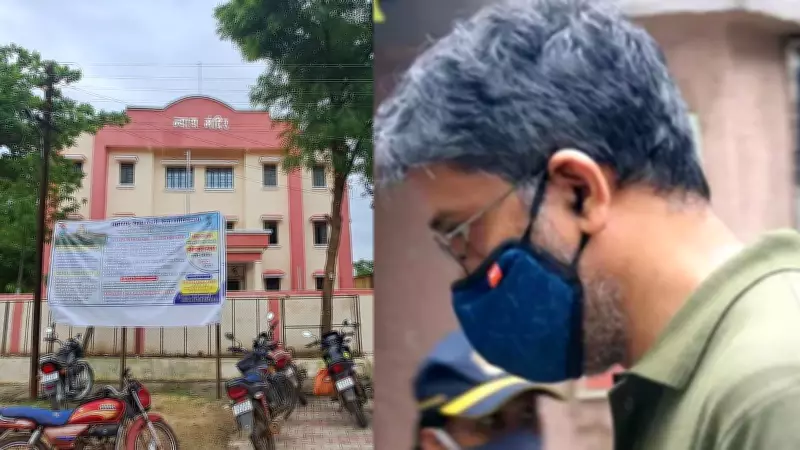
A dedicated sessions court established in Maharashtra's Gadchiroli district to deliver justice to adivasi communities in Maoist-affected areas has faced significant operational challenges due to the absence of judges on two separate occasions. The Aheri sessions court, inaugurated with the promise of bringing judicial services closer to remote villages, remained without a presiding judge for extended periods, severely disrupting trials and legal proceedings.
Supreme Court Intervention Triggers Action
The issue came to light during a Supreme Court hearing on January 21, 2026, concerning Surendra Gadling, a co-accused in the Bhima-Koregaon case. Gadling's lawyer revealed that a 2016 trial related to arson allegations had not commenced due to the irregular presence of a judge and permanent prosecutor at the Aheri court. The Supreme Court promptly directed the Registrar General of the Bombay High Court to ensure the regular posting of a competent judge within seven days, leading to an appointment two days later.
Prolonged Vacancies Halt Judicial Proceedings
Court records indicate that the January 2026 vacancy, which lasted 22 days, was not an isolated incident. Previously, the same court remained without a judge for nearly three months in 2025, effectively suspending trials, bail hearings, and routine judicial work. When a judge finally assumed charge on July 22, 2025, they discovered more than 200 undertrial cases pending, many involving accused individuals who had been incarcerated for years.

Impact on Undertrials and Legal Professionals
During these vacancies, trials could not proceed, and accused persons were not produced from jails for hearings. Lawyers were compelled to travel over 120 kilometers to Gadchiroli, where additional charges of the Aheri court had been assigned to a judge. Undertrials even wrote from jail to the Gadchiroli court and the Bombay High Court, seeking transfers of their cases as proceedings had ground to a halt.
Without a full-time judge, only urgent bail applications and pleas seeking extensions for filing chargesheets were addressed by in-charge courts. In one instance, an accused arrested in 2020 sought bail, noting that despite charges being framed in 2023 on Supreme Court directions, no witness had been examined until July 2025. Another accused remained in jail for over a year because they could not furnish a surety of Rs 30,000, gaining release only in August 2025 after a judge was appointed.
Bar Association and Official Responses
Rajendra Prasad Menganwar, president of the Aheri Bar Association, emphasized that the court was established to prevent litigants and lawyers from traveling up to 200 kilometers for hearings. During the 2025 vacancy, the association met with administrative authorities of the Nagpur Bench of the Bombay High Court to request filling the position, which was subsequently addressed.
Court officials pointed out that the Aheri court handles several crucial cases under the Unlawful Activities (Prevention) Act, linked to alleged Maoist activities, necessitating careful scrutiny in judicial appointments. This requirement contributed to delays in selecting suitable candidates. An email sent to the Bombay High Court regarding the appointment delays did not receive a response.
Historical Context and Promises
The Aheri court fulfilled a longstanding demand dating back to at least 2008, aiming to bring judicial services closer to communities in Maoist-affected areas with poor connectivity and irregular transport. A magistrate court was inaugurated in 2015, followed by the Sessions Court in July 2023. At the inauguration, then Supreme Court Justice Bhushan R Gavai stated that the court would help deliver justice to 725 villages across Aheri, Mulchera, Sironcha, Bhamragad, and Etapalli talukas, acknowledging the challenges posed by Gadchiroli's size and terrain.
Justice Gavai remarked, "...justice system has come to the doorsteps of the tribals in Gadchiroli." However, the repeated judicial vacancies have undermined this vision, highlighting systemic issues in ensuring consistent judicial presence in remote, sensitive regions.