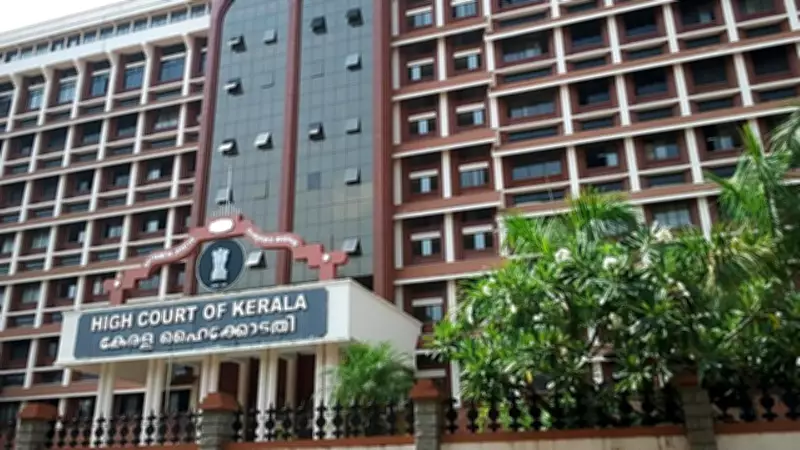
Kerala High Court Dismisses Petition Against Christian Priests' Temple Entry
The Kerala High Court has dismissed a petition challenging the entry of two Christian priests into a Hindu temple, while urging the state government to examine whether a rule restricting non-Hindu entry should be amended. The court emphasized that legal provisions should not be used to "foment disharmony" between religious communities.
Court Questions Rule Restricting Non-Hindu Entry
Dismissing the petition on January 30, a Division Bench comprising Justices Raja Vijayaraghavan and K V Jayakumar identified an apparent inconsistency between the Kerala Hindu Places of Public Worship (Authorisation of Entry) Act, 1965, and Rule 3(a) of its accompanying rules. While the Act contains no provision prohibiting non-Hindu entry, Rule 3(a) specifically restricts entry to Hindus only.
The court stated: "It is for the Government to examine whether Rule 3(a) requires reconsideration, amendment or modification so as to bring it in consonance with the legislative intent and constitutional principles." The bench directed the government to consult with the Travancore Devaswom Board, temple priests, religious scholars, and other stakeholders before deciding whether to retain or amend the rule.
Background of the Case
The petition was filed by devotee Sanil Narayanan Nampoothiri against authorities of the Sree Parthasarathy Temple in Adoor, which falls under the state-run Travancore Devaswom Board. Nampoothiri sought action after two Christian priests entered the temple in 2023 upon invitation.
He claimed their entry violated both the 1965 Act and its accompanying rules. However, the Devaswom Board stated in its affidavit that the priests were invited as guests and their entry was permitted by the temple's chief priest (tantri), making it lawful.
Court's Emphasis on Constitutional Values
The High Court made several significant observations about the evolving nature of law and society. "Law is not static; it is dynamic and evolves with the changing needs and realities of society," the bench noted. "As society advances and becomes more inclusive, statutory provisions and subordinate legislation must be interpreted in a manner that advances constitutional values and social cohesion."
The court further stated: "Statutes, rules and regulations ought not to be permitted to become instruments for fomenting discord or disharmony between different religions, castes, sub-castes or communities."
Legal Principles and Precedents
The High Court referenced several Supreme Court verdicts establishing that subordinate legislation cannot exceed the scope of its parent Act. "The law is well settled on this point that if there is any inconsistency between the parent Act and the Rules made thereunder, the former shall prevail," the court observed.
The court also recalled that the objective of the repealed Travancore-Cochin Temple Entry (Removal of Disabilities) Act was to permit entry of all Hindu sects and classes while preventing discrimination among them.
Amicus Curiae's Input
The Amicus Curiae appointed by the court pointed out that while restrictions on non-Hindu entry could be considered a "religious practice," they do not constitute an "essential religious practice." The core tenets of Hinduism would remain unchanged whether non-Hindus are permitted or prevented from entering Hindu religious institutions.
This distinction between religious practice and essential religious practice carries significant legal weight in determining what aspects of religious tradition receive constitutional protection.
Broader Implications
The Kerala High Court's decision comes at a time when questions of religious access and interfaith harmony are increasingly prominent in Indian society. By directing the government to review Rule 3(a) through stakeholder consultation, the court has opened a pathway for potential reform while respecting established religious institutions.
The judgment emphasizes that legal frameworks must adapt to promote social cohesion rather than division, particularly in matters involving multiple religious communities in a pluralistic society.