Delhi High Court Judge Reserves Decision on Kejriwal's Recusal Request in Liquor Policy Case
In a significant development at the Delhi High Court, Justice Swarana Kanta Sharma has reserved her order on a plea filed by former Chief Minister Arvind Kejriwal and others seeking her recusal from hearing a CBI petition. The Central Bureau of Investigation's appeal challenges their acquittal in the high-profile liquor policy case, marking a critical juncture in this ongoing legal battle.
Kejriwal's Allegations of Judicial Bias and Violation of Natural Justice
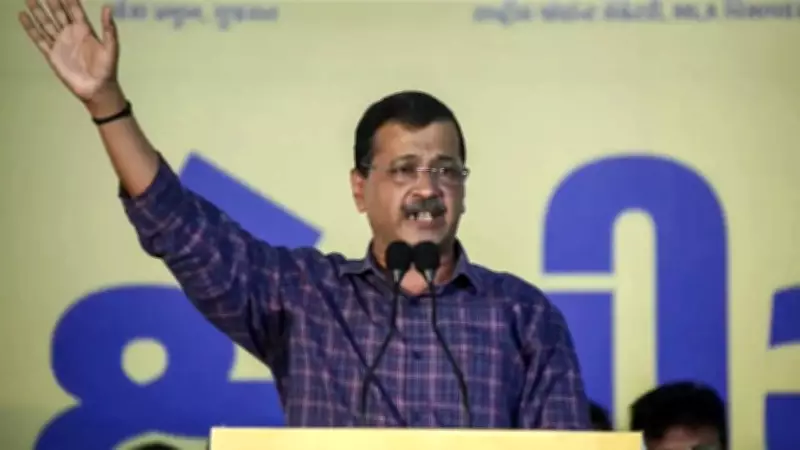
Arvind Kejriwal, representing himself and other accused, presented a detailed argument before the court, expressing what he termed a "reasonable apprehension of bias" from Justice Sharma. The Aam Aadmi Party chief contended that the judge's previous orders in the liquor policy case had "almost declared us guilty and corrupt." He emphasized that this perception created a genuine fear that he might not receive a fair hearing in her courtroom.
Kejriwal specifically referenced a March 9 order by Justice Sharma, where she noted that certain observations and findings of the trial court appeared "prima facie erroneous" and required further consideration. "I was shocked," Kejriwal stated, questioning the urgency behind staying the trial court's recommendation for departmental action against a CBI investigating officer. He argued that this action, taken without hearing the defense, constituted a violation of natural justice principles.

The AAP Leader's Detailed Concerns About Previous Judicial Observations
Elaborating on his concerns, Kejriwal pointed to Justice Sharma's involvement in multiple related cases. "My case came regarding an arrest by the Enforcement Directorate," he explained. "Bail applications of Sanjay Singh, K Kavitha, and Aman Dhall were also heard. The observations made by this court in those matters amount to almost judgments."
Kejriwal expressed particular distress about how quickly the trial court's order was declared erroneous. "In a 5-10 minute hearing, such a substantial trial court order was declared 'erroneous'... It was passed without hearing us, without taking our reply," he asserted, reinforcing his claim of procedural unfairness.
The former CM also cited Justice Sharma's 2022 order that permitted the ED to change the trial court judge in a money-laundering case against AAP leader Satyender Jain. This precedent, according to Kejriwal, further contributed to his apprehension about potential bias in the current proceedings.
Political and Ideological Dimensions Enter the Legal Debate
Kejriwal introduced a controversial element to his argument by raising Justice Sharma's attendance at four functions organized by the Akhil Bharatiya Adhivakta Parishad. He claimed this organization maintains ideological links to the BJP and RSS, political entities that his party "strongly opposes."
"This case is political... Your attending four times creates an apprehension in my mind — if I am from the opposite ideology, will I get justice?" Kejriwal questioned directly. When Justice Sharma asked whether she had made any ideological or political statements at these events, Kejriwal maintained that her mere attendance was sufficient to raise concerns about impartiality.
Solicitor General's Strong Opposition to Recusal Plea
Solicitor General Tushar Mehta presented a forceful counter-argument against the recusal request. He cautioned that allowing such pleas based on "unreasonable apprehension" would establish a dangerous precedent that could lead to "bench hunting" by litigants dissatisfied with judicial observations.
"Dissatisfaction with interim observations cannot justify recusal," Mehta asserted firmly. He defended Justice Sharma's attendance at the Adhivakta Parishad events, noting that they were organized by the bar association and that Supreme Court and High Court judges regularly participate in such legal gatherings.

The Solicitor General pointed out a significant contradiction in Kejriwal's argument: "His bail was granted by one of the Supreme Court judges who attended Parishad events." Mehta posed a rhetorical question to the court: "If any honorable judge is invited by the bar association to speak on the subject of law, would the judge be justified in refusing?"
Legal Implications and Potential Consequences
Mehta took a stern position regarding what he characterized as attempts to "virtually malign the bench." He warned that such tactics could enable litigants to seek case transfers through improper means. The Solicitor General urged the court to dismiss the recusal applications with costs and even suggested that contempt proceedings might be warranted against those making unfounded allegations against the judiciary.
This legal confrontation highlights the delicate balance between a litigant's right to a fair hearing and the judiciary's need to function without undue pressure from allegations of bias. Justice Sharma's observation that this was the first recusal request she had encountered in her career underscores the unusual nature of this proceeding.
The reserved order will determine whether Justice Sharma continues to hear the CBI's appeal against the acquittal or whether the case must be reassigned to another bench. This decision carries significant implications for both the specific liquor policy case and broader judicial practices regarding recusal standards in India's legal system.