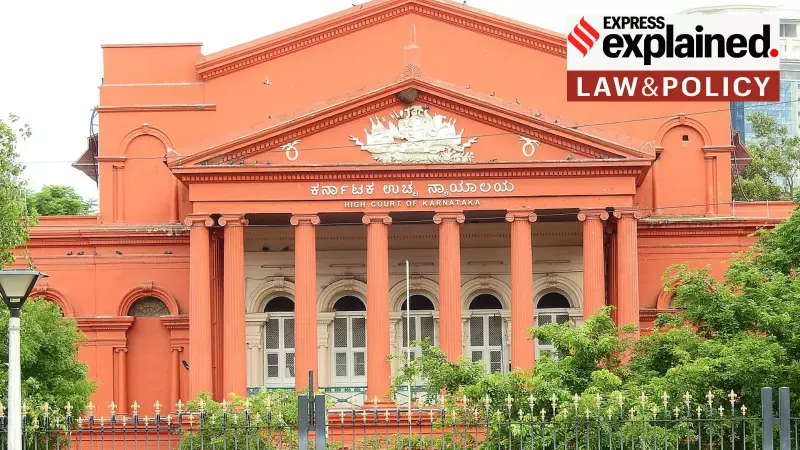
In a landmark judgment that brings clarity to a long-standing dispute, the Karnataka High Court has officially recognized bike taxis as a legal mode of transportation. The court has directed the state government to issue contract carriage permits for these services, mandating the use of yellow-coloured number plates. This verdict, delivered last week, marks the culmination of a seven-year legal struggle by aggregator companies and riders seeking formal approval for their operations.
Court Upholds Constitutional Right to Profession
The High Court, in its order dated January 23, emphasized that operating taxis constitutes a legitimate business activity. It ruled that such endeavors are protected under Article 19(1)(g) of the Indian Constitution, which guarantees the right to practice any profession or carry on any occupation, trade, or business. The court explicitly stated that the bike-taxi business is not inherently dangerous, illegal, or immoral, thereby affirming its legality and social utility.
Immediate Relief for Riders and Aggregators
This decision is expected to provide significant relief to approximately 6 lakh bike-taxi riders and aggregators across Karnataka. These individuals and companies had been forced to halt their operations since April 2025 due to regulatory uncertainties. With the court's directive, the state government must now consider applications from both individual bike owners and aggregator platforms seeking permits to operate as contract carriages.
Background of the Legal Battle
The controversy began in 2019 when taxi-aggregator companies such as Uber India, Rapido, and Ola encountered obstacles in operating bike taxis on their platforms. The state government had been rejecting license applications or refusing to renew existing ones in certain cases. In response, companies holding licenses under the Karnataka On-Demand Transport Technology Aggregator Rules 2016 made representations to operate bike taxis and subsequently approached the High Court for intervention.
Initially, a single-judge bench ruled on April 2, 2025, partially favoring the companies by acknowledging that motorcycles could be registered as transport vehicles under the Motor Vehicles Act. However, it accepted the state government's argument that aggregators did not have an established right to ply motorcycles as taxis under the Act. Consequently, the bench directed that bike taxis cease operations until the state formulated clear regulations.
State's Opposition and Court's Rebuttal
A division bench later heard an appeal against this order and granted the state one month to release a policy regulating bike taxis. The state government, however, declared a policy decision not to permit bike taxis, citing that only four-wheelers could be onboarded as taxis under existing rules. It raised concerns about passenger safety, increased traffic congestion, the availability of public transport, and pollution. Additionally, the state suggested that motorcyclists could instead work as delivery partners under the Gig Workers Act.
The division bench, in its ruling, relied on Central government notifications that permit motorcycles to be used as contract carriages, as well as the Motor Vehicle Aggregator Guidelines, 2025, which provide for issuing licenses to bike taxi aggregators. The court also considered recommendations from an expert committee report submitted to the state government in April 2019 and referenced the now-withdrawn Karnataka Electric Bike Taxi Scheme, 2021, which highlighted the role of bike taxis in providing last-mile connectivity to enhance public transport usage.
The court noted, "No informed decision was taken on the part of the State Government to prohibit bike taxi services. The necessity for proscribing the carrying on of generally or on specified occasions or at specified times and seasons, could also be capped."
Industry and Union Reactions
Aggregator companies like Uber and Rapido have welcomed the High Court's order, emphasizing that bike taxis serve as a vital mobility lifeline. They argue that these services offer an affordable and convenient means for people to navigate through traffic, thereby addressing urban transportation challenges effectively.
On the other hand, autorickshaw unions, who have long opposed bike taxis, are contemplating approaching the Supreme Court to challenge the High Court's verdict. They contend that allowing bike taxis to operate will adversely affect their business and exacerbate traffic congestion in cities.
This ruling not only resolves a protracted legal issue but also sets a precedent for the regulation of bike taxis in other states, potentially influencing future transportation policies across India.