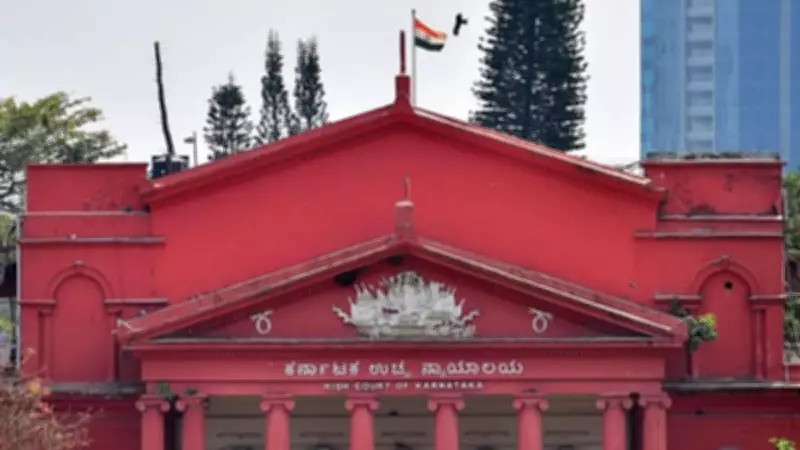
The Karnataka High Court has ruled that expenses related to education are not static and cannot be confined to a rigid upper limit. The observation came while the court directed a Bengaluru resident to bear all educational expenses of his two minor sons, who are currently residing with their mother.
Court's Ruling on Educational Maintenance
Justice M. Nagaprasanna, presiding over the case, emphasized that the cost of education is dynamic and subject to change over time. The court noted that imposing a fixed ceiling on educational expenses would be impractical and potentially detrimental to the child's best interests.
The case involved a father who had been ordered to pay maintenance for his two sons, aged 12 and 15. The mother sought additional funds for school fees, tuition, and other educational needs, arguing that the existing maintenance amount was insufficient.

Key Observations
The High Court observed that education is a fundamental right of every child, and parents cannot escape their responsibility by citing a predetermined limit. The bench stated: "Education expenses are not static; they evolve with the child's needs and the prevailing educational landscape. Courts cannot set a rigid upper cap that may hinder the child's development."
The court further directed the father to pay all actual educational expenses, including school fees, books, uniforms, and extracurricular activity costs, upon production of receipts by the mother. The father was also ordered to cover future expenses for higher education, if the children pursue it.
Implications for Maintenance Cases
This ruling sets a precedent in family law cases involving child maintenance. Legal experts say it reinforces the principle that a child's welfare is paramount and that financial obligations of parents must adapt to changing circumstances.
The court also reminded that failure to comply with the order could result in contempt proceedings. The father has been given the option to seek modification of the order if his financial situation changes significantly.