Jaisalmer Man Arrested as Mastermind of Telegram-Based Anti-National Network in UP
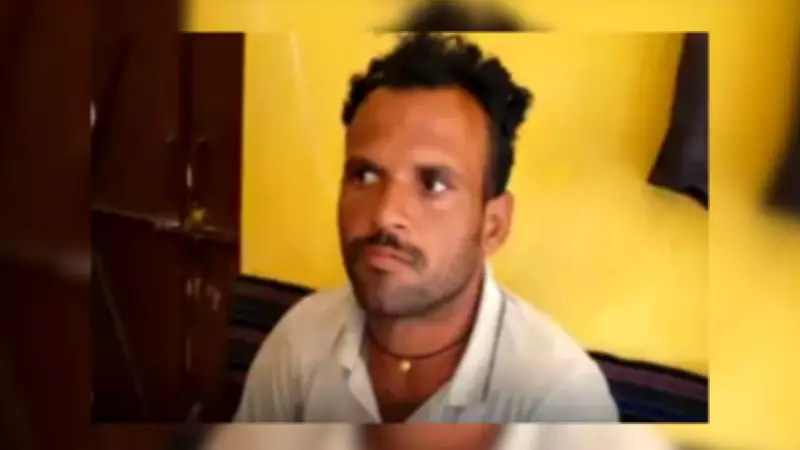
In a significant breakthrough, the Uttar Pradesh Anti-Terrorism Squad (ATS) and state police have arrested Rajuram Godara from the Nachna area of Jaisalmer, Rajasthan, in connection with a series of arson incidents and anti-national activities reported in Bijnor, Uttar Pradesh, during March and April 2026. The arrest follows extensive investigations, forensic analysis, and mobile data examination that identified Godara as the digital controller and mastermind of a sophisticated Telegram-based network operating from Jaisalmer while directing activities in Uttar Pradesh.
Details of the Arrest and Investigation
According to official reports, action has been taken under the stringent Unlawful Activities (Prevention) Act (UAPA), with both the National Investigation Agency (NIA) and UP ATS actively involved in the probe. Godara was identified as the administrator of a Telegram group, with his mobile number saved under the alias "Syed" by co-accused individuals. In a related development, another suspect has been detained under Section 151 of the Criminal Procedure Code and is currently undergoing interrogation, with his mobile phone seized by the UP ATS for forensic examination.
The case traces back to the night of March 24, 2026, when acting on intelligence inputs from UP Police, a 29-year-old man was apprehended from his residence in the Bharewala area near the India-Pakistan border within the Nachna police station limits. Initially released after joint interrogation at the Joint Interrogation Centre (JIC), his mobile phone was confiscated for forensic analysis. During questioning, he identified himself as "Syed," but sustained interrogation later confirmed his true identity as Rajuram Godara. Following the emergence of incriminating evidence from mobile examinations, he was re-detained from Jaisalmer on April 15 and formally arrested in Uttar Pradesh.

Background of the Arson Incidents
UP Police ADG (STF and Law & Order) Amitabh Yash stated that the case originated from an incident on March 4, 2026, in Kiratpur, Bijnor. At approximately 10:15 PM, a pickup vehicle belonging to Nimish Rastogi, parked in front of a temple in Mohalla Jhanda, was set ablaze using petrol. Initially treated as a routine criminal case, technical investigations later revealed it to be part of a larger, organized conspiracy, prompting the NIA to take over the investigation.
Police investigations uncovered that the main accused, Abuzar Shamim, received tasks via Telegram from a handler using the pseudonym "Abu Bakar." He was instructed to target vehicles belonging to a specific community, record videos of the arson, and transmit them via Telegram in exchange for monetary payments, which were to be made through online channels or hawala networks.
Network Operations and International Links
During the investigation, Rajuram Godara, son of Madan Lal and a resident of Dadoodewala village under Nachna police station in Pokhran tehsil, Jaisalmer district, was identified and arrested. Godara admitted during interrogation that he operated the Telegram group through his mobile number and served as its administrator. His number had been saved as "Syed" by co-accused Zaid. Notably, on the day Abuzar was arrested, Shakib Ahmed (a resident of Meerut, arrested in ATS Lucknow FIR No. 02/26) had contacted both Godara and Zaid, after which Godara changed his mobile device. Both phones are now under detailed forensic scrutiny.
The Telegram group was utilized to coordinate anti-national activities, including targeting vehicles of a particular community and damaging railway tracks. Several related videos were recovered from Zaid's mobile device. Forensic analysis of Godara's phone revealed images of weapons, objectionable videos, and chat logs related to spreading unrest across various regions of the country. Police authorities believe this is not the work of a lone individual but part of a well-organized sleeper cell network.

Legal Charges and Further Arrests
Godara has been arrested in connection with Case No. 156/2025 registered at Nangla police station under Sections 152 and 61(2)(a) of the Bharatiya Nyaya Sanhita (BNS), Sections 7 and 25(1)(A) of the Arms Act, and Section 69(A) of the Information Technology Act. So far, Bijnor police have arrested Abuzar Shamim, Zaid, Mannan, and Sameer in this case. Sameer was apprehended from Najibabad and was also in contact with handlers based abroad. Investigation of their mobile phones led to Godara, who was identified as the Telegram group admin with his number saved as "Syed."
Scope and Modus Operandi of the Network
Officials reported that multiple arson incidents occurred in the Kiratpur and Nangla Soti police station areas during March and early April 2026. Although no casualties were reported, vehicles and properties sustained damage. Police have characterized these events as a conspiracy to disturb communal harmony. Investigating agencies believe the network became active around January 2026 and extended beyond Bijnor to cities such as Lucknow, Mumbai, and Jaisalmer. International links have reportedly been traced to Saudi Arabia and South Africa.
Police estimate that the network involved approximately 15–20 active members. Youths were initially contacted through social media platforms like Instagram and Facebook before being added to Telegram groups. Economically disadvantaged or ideologically vulnerable individuals were specifically targeted. Under the network's directives, accused individuals were instructed to identify "soft targets" in their localities, with Google Maps and live location tracking used to monitor activities. Uploading videos or photos after committing arson was mandatory, and payments were disbursed based on these submissions.
Broader Implications and Ongoing Probe
Given the seriousness of the case and its foreign connections, teams from the NIA and ATS are intensively investigating the matter. All accused have been charged under the UAPA. Police officials note that this represents a concerning new trend where seemingly ordinary youths are being recruited as sleeper cells through social media platforms, highlighting the evolving challenges in counter-terrorism efforts. Following the incident, police and Border Security Force (BSF) personnel were placed on high alert in border areas to prevent any further untoward incidents.