Iran's Strategic Move in Hormuz Bolsters Putin as U.S. Eases Russian Oil Restrictions
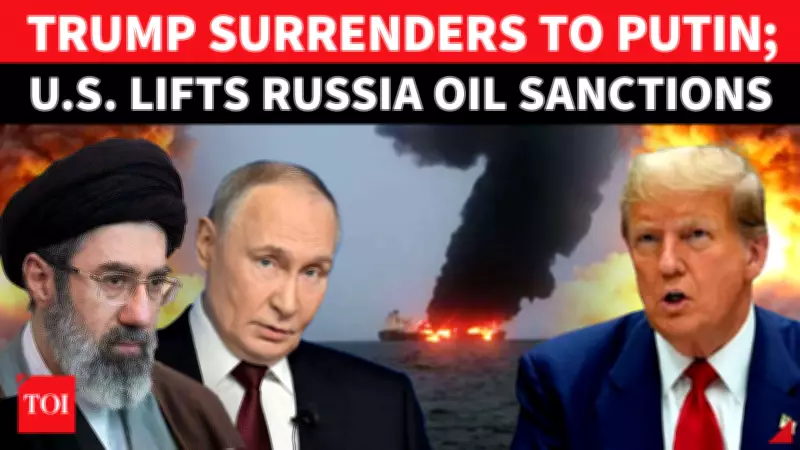
In a dramatic shift in global energy policy, the Trump administration has granted temporary authorization for the purchase of specific Russian oil products that are already in transit at sea. This decision, announced by U.S. Treasury Secretary Scott Bessent on March 13, 2026, provides a crucial financial lifeline to Russian President Vladimir Putin, a key ally of Iran, amid escalating conflicts in the Middle East.
U.S. Policy Reversal Amidst War-Driven Energy Crisis
The authorization comes as the ongoing war involving the United States, Israel, and Iran has plunged global energy markets into turmoil. On the same day as the announcement, Brent crude prices surged past $100 per barrel, marking the first time since August 2022 that oil has reached such heights. This price spike underscores the severe impact of the conflict on worldwide energy supplies and economic stability.
Secretary Bessent emphasized that the waiver is narrowly targeted, applying only to oil already at sea, in an effort to mitigate disruptions without broadly sanctioning Russian exports. However, critics argue that this move effectively eases pressure on Russia, allowing Putin to secure much-needed revenue during a period of intense geopolitical strife.

Iran's Role in Escalating Tensions Through Hormuz Blockade
Concurrently, Iran has intensified its military posture by implementing a blockade in the Strait of Hormuz, a critical chokepoint for global oil shipments. This action has raised fears of further escalation, with Russia conducting naval drills in the region that are perceived as supportive of Iran's efforts. The blockade not only threatens to disrupt oil flows but also strengthens Iran's bargaining power in the conflict, indirectly aiding Putin by creating additional leverage against Western nations.
The synergy between Iran and Russia in this context highlights a strategic alliance that complicates U.S. and Israeli military objectives. As Iran's new supreme leader issues warnings and pledges related to the Hormuz strategy, the situation grows increasingly volatile, with potential ramifications for international trade and security.
Global Reactions and Broader Implications
The U.S. decision has sparked controversy, with some viewing it as a concession that undermines earlier sanctions aimed at isolating Russia. Meanwhile, the war has led to other significant events, such as the crash of a U.S. aircraft near Iran, resulting in the deaths of four American service members, and joint assaults by Iran and Hezbollah on Israel. These incidents contribute to a climate of uncertainty and retaliation fears.
In diplomatic arenas, Russia and China have united to defend Iran against accusations at the United Nations, further polarizing international relations. The combination of military actions and policy shifts suggests a rapidly evolving landscape where energy economics and geopolitical maneuvers are deeply intertwined.
As the conflict persists, the interplay between Iran's blockade, U.S. oil policy adjustments, and Russia's financial gains will likely shape future developments in the region and beyond, with lasting effects on global energy markets and diplomatic alliances.