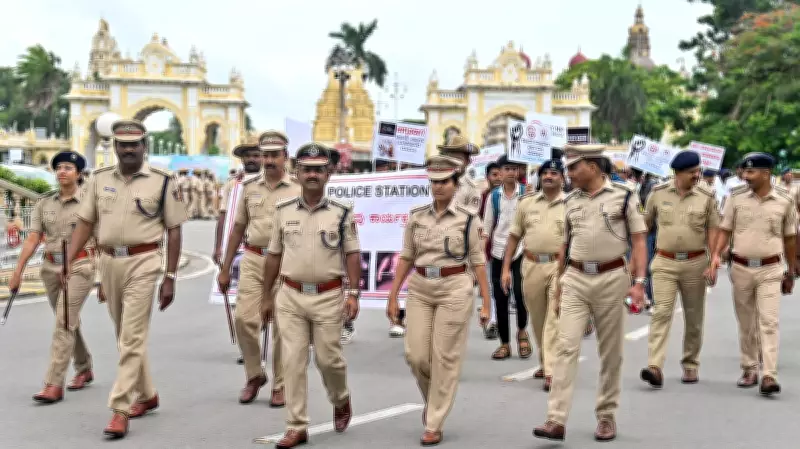
India's Policing Crisis: A Call for Ethical Leadership and Reform
In a critical examination of India's law enforcement landscape, a significant leadership vacuum has been identified within the police force, posing severe challenges to public safety and governance. This issue underscores the urgent need for comprehensive reforms that prioritize integrity and a steadfast commitment to the rule of law. The current state of policing in India reveals systemic weaknesses that hinder effective crime prevention and erode citizen trust.
The Root of the Problem: Leadership Deficiencies
The core of India's policing woes lies in a profound lack of inspirational leadership. Many police departments are plagued by leaders who fail to embody the ethical standards necessary for public service. This deficiency not only demoralizes rank-and-file officers but also compromises operational efficiency. Without strong, principled guidance, police forces struggle to adapt to modern challenges, including cybercrime and organized illegal activities.
Integrity and accountability must become the cornerstones of police leadership. Instances of corruption and misconduct have tarnished the reputation of law enforcement agencies, making it imperative to instill a culture of transparency. Leaders who lead by example can foster an environment where officers are motivated to uphold justice without fear or favor.
Commitment to the Rule of Law: A Non-Negotiable Principle
A renewed dedication to the rule of law is essential for transforming India's policing. This involves ensuring that all actions by police personnel are grounded in legal frameworks and respect for human rights. The current vacuum often leads to arbitrary enforcement and violations, which undermine the very foundation of democracy.
- Strengthening legal oversight mechanisms to hold leaders accountable.
- Implementing regular training programs on constitutional values and ethical policing.
- Promoting community engagement to rebuild public confidence in law enforcement.
By embedding these principles, police forces can transition from being perceived as oppressive entities to trusted guardians of society.
Pathways to Reform: Inspiring Change from Within
To address this leadership vacuum, India must invest in cultivating a new generation of police leaders. This requires:
- Revamping recruitment processes to prioritize candidates with strong moral character and leadership potential.
- Establishing mentorship programs where experienced, ethical officers guide newcomers.
- Creating incentives for exemplary service, such as promotions based on merit and integrity rather than seniority alone.
Ultimately, the reform India's policing needs is not just about structural changes but about fostering a leadership ethos that inspires with unwavering integrity. Only then can the police force effectively combat crime and uphold justice in a rapidly evolving society.
In conclusion, tackling the leadership vacuum in India's police is a pressing imperative. By championing integrity and a robust commitment to the rule of law, the nation can pave the way for a more just and secure future, where law enforcement serves as a beacon of trust and efficiency.