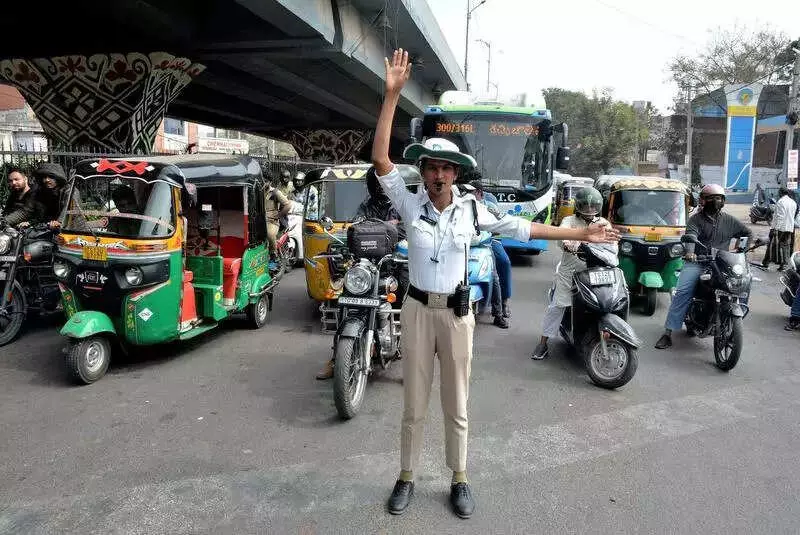
In a transformative initiative by the Hyderabad traffic police, 39 transgender persons were selected as traffic assistants in December 2024, marking a significant step toward inclusion and empowerment. Among them are Swathi, Bhanupriya, and T Nisha, whose journeys from seeking alms at traffic signals to manning those very intersections illustrate a profound societal shift.
A New Chapter of Dignity and Belonging
More than a year into this pilot project, the recruits report that the biggest change extends beyond mere public acceptance. They have cultivated a growing sense of self-respect and belonging, both on the roads and within their personal lives. Swathi, attached to the Chandrayangutta traffic police station, expresses how being addressed as 'madam' by motorists fills her with immense pride.
"The uniform has given me dignity. People who mocked me earlier now speak with respect. The stares are gone, now I feel normal," said the 26-year-old from Suryapet, who now regulates traffic at the bustling Midhani junction.
Overcoming Adversity to Achieve Success
The road to this achievement was fraught with challenges. Forced to leave home after revealing her gender identity, Swathi battled numerous obstacles to complete her Intermediate education. With the support of the transgender community, she underwent gender-affirming surgery in Mumbai. Facing limited employment opportunities, she reluctantly returned to begging as a means of survival.
However, a government notification in September 2024 regarding the recruitment of traffic assistants proved to be a pivotal turning point. Since then, Swathi has not looked back, embracing her role with dedication and pride.
Stories of Resilience and Acceptance
Bhanupriya, stationed at the Santosh Nagar traffic police station, shares a narrative common among her peers. Fearful of disclosing her gender identity, she left her hometown in Karimnagar for Hyderabad, spending three uncertain days at the Mahatma Gandhi Bus Station. After traveling to Vijayawada for surgery, she too resorted to begging to survive.
"Earlier, we were only surviving. Now, we belong," Bhanupriya remarked, highlighting the profound impact of her new role.
T Nisha, who joined the traffic wing after completing her BTech, notes the visible change in everyday interactions. "Earlier, at traffic signals, people treated us badly. Now, with this uniform, they give us respect. In traffic, the public observes everything, our behaviour, how we conduct ourselves. The respect comes from how we do our duty," she added.
Rebuilding Family Ties and Facing Challenges
The uniform has not only altered public perception but also facilitated the reconnection with families and friends who had previously distanced themselves. "The job has made conversations easier and visits home possible again," Swathi explained. "While acceptance has not come overnight, the badge and routine have slowly rebuilt trust within our families."
Navigating Harassment and Professional Hurdles
Despite the progress, the traffic assistants occasionally face verbal abuse or indecent behaviour from motorists. Nisha, attached to the Mahankali traffic police station, acknowledges that such challenges are not unique to them. "When we challan violators or take photos, some of them taunt or threaten us," Bhanupriya noted. "There were cases when some threatened and mocked me. However, those taunts don't deter me from doing my duty. Whenever we face such issues, senior officers step in."
Pulla Reddy, a pan shop owner near the Champapet signal, observed, "In the beginning, it felt different to see transgender persons manning traffic signals, but now it doesn't even register. They do their duty firmly, and motorists listen. Uniform makes a difference."
Addressing Absenteeism with Compassion
The initial year involved adjustments, including instances of absenteeism linked to health issues, personal transitions, and adapting to structured shifts, as per an anonymous official. Attendance has improved over time, reflecting the recruits' commitment.
Hyderabad Joint Commissioner of Police (Traffic) D Joel Davis commended the recruits for effectively supporting traffic regulation and enforcement. Regarding misbehaviour, he noted that objections to challans are a routine challenge faced by all traffic personnel, with nearby inspectors or sub-inspectors intervening to maintain order.
Davis emphasized a humanitarian approach to absenteeism, considering the post-operative recovery and potential medical complications following gender-affirming surgeries. "Treating attendance as a purely disciplinary issue serves no purpose," he stated, adding that while no punitive action is taken, the period is managed on a 'no work, no pay' basis.
Aspirations and Calls for Institutional Support
With their new roles opening avenues for growth, Swathi and Bhanupriya are pursuing educational degrees through open universities, aspiring to become a sub-inspector and government employee, respectively. Nisha also aims to advance within the uniformed force.
However, they advocate for institutional backing to ensure the initiative's long-term success. Transgender rights activists echo this demand, stressing that temporary employment may not lead to sustainable change.
"Whatever it is, it should be permanent. One-time assistance pushes transgender persons back to begging once support ends," said Chandramukhi Muvvala, a transgender rights activist. "Not just policing, transgender persons must have representation across all government departments. Visibility in routine public roles is key for public acceptance."
This initiative in Hyderabad stands as a beacon of hope, demonstrating how inclusive policies can transform lives and foster a more accepting society.