Global Geopolitical Shifts: From Hormuz to European Elections
This week's global developments reveal escalating tensions in strategic waterways, dramatic political changes in Europe, and innovative battlefield tactics in Ukraine. The situation underscores a world grappling with conflict, energy security, and shifting alliances.
The Strait of Hormuz: A Volatile Chokepoint
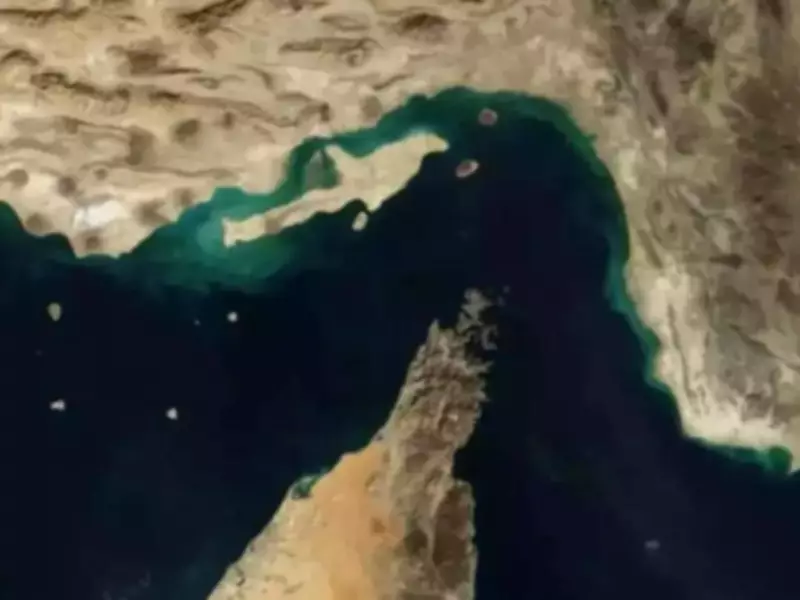
What a difference a week makes in global shipping lanes. Just seven days after failed U.S.-Iran talks in Pakistan, former President Donald Trump announced a counter-blockade of Iranian ports in response to Tehran's blockade of the vital Strait of Hormuz. Following the U.S. blockade implementation, Iran initially declared the strait open for civilian and cargo traffic, linking this to the announced ceasefire between Israel and Lebanon.
However, Trump maintained that the U.S. blockade would continue until a comprehensive peace deal with Iran was achieved. He expressed optimism about upcoming negotiations, but the situation quickly deteriorated when the U.S. Navy intercepted Iran-linked ships attempting to exit the Gulf of Oman. In response, Tehran reversed its position and closed the Strait of Hormuz again.

The escalation reached new heights when Iran's Islamic Revolutionary Guard Corps fired upon two India-flagged vessels, prompting New Delhi to formally protest and summon the Iranian ambassador. The strategic positioning of U.S. naval assets in the Gulf of Oman rather than the Persian Gulf has proven effective, keeping American forces beyond the range of Iran's remaining small naval craft while allowing interception of at least thirteen ships from Iranian ports.
Matters intensified further when the U.S. Navy boarded and seized an Iranian-flagged cargo ship after Tehran's renewed closure declaration. Iran has vowed retaliation and suspended commitment to further talks in Pakistan. The ongoing blockade exerts significant economic pressure on Iran's already war-battered economy, particularly as U.S. waivers for Iranian oil shipments at sea have not been extended.
This confrontation has transformed into a test of endurance, with rising global oil prices affecting all parties. Iran's interdiction of third-country vessels transiting Hormuz to non-Iranian destinations has additionally eroded its moral standing in the international community.
European Political Earthquake: Hungary's Historic Shift
In a stunning electoral development, Hungary's long-standing leader Viktor Orbán was decisively ousted from power. His Fidesz party suffered a crushing defeat in parliamentary elections, with Peter Magyar's Tisza party securing a commanding two-thirds majority.
Magyar has pledged comprehensive reforms including:
- Dismantling Orbán's political apparatus
- Dissolving the state broadcaster
- Reforming the judiciary system
- Investigating corruption allegations
- Establishing independent media and educational institutions
This outcome represents a significant setback for global conservative movements, as Orbán had become a prominent figure in neo-conservative politics, hosting international gatherings like the American Conservative Political Action Conference using Hungarian public funds. His administration served as a testing ground for conservative electoral strategies that were subsequently exported worldwide.
The election also marks a blow to Russian President Vladimir Putin, as Orbán maintained close ties with Moscow despite European sanctions, frequently obstructing EU measures against Russia and support packages for Ukraine. Hungarian-Ukrainian relations, which had deteriorated under Orbán, are expected to improve under Magyar's leadership, particularly given his stance against territorial concessions by Ukraine.
Bulgaria's Political Reversal
Meanwhile, Bulgaria witnessed a contrasting political shift with the electoral success of pro-Russia former president Rumen Radev. Advocating for renewed energy cooperation with Moscow, Radev's victory introduces uncertainty about Bulgaria's alignment within the European Union. However, given Bulgaria's recent adoption of the euro and its need for EU-supported reforms, Sofia is likely to maintain cooperation with Brussels despite its Moscow-leaning leadership.

Ukraine's Unmanned Warfare Innovation
Despite international attention shifting toward the Iran conflict, Russia's aggression against Ukraine continues unabated. Between April 14 and 15 alone, Russian forces launched 44 missiles and 659 drones against Ukrainian cities, resulting in multiple casualties across Kyiv, Dnipro, and Odesa regions.
The Iran conflict has exacerbated Ukraine's air defense shortages, with President Volodymyr Zelenskyy acknowledging the connection. Additionally, the United States now has pretext to delay weapons transfers to Ukraine, even under programs funded by European NATO members. Compounding these challenges, temporary increases in Russian oil revenues due to Middle Eastern tensions provide Moscow with additional resources for its Ukrainian campaign.
In response, Ukraine has demonstrated remarkable battlefield innovation. Last week marked a military milestone when Ukrainian forces captured a Russian position exclusively using unmanned systems—unmanned ground vehicles and aerial drones. The Russian soldiers surrendered directly to these robotic systems, representing a first in modern warfare. This development could potentially offset Russia's numerical advantage by allowing Ukraine to conduct operations while keeping human soldiers at safer distances.
Baltic States' Principled Stand
Estonia, Latvia, and Lithuania have collectively denied Slovak Prime Minister Robert Fico's flight transit through their airspace en route to Moscow's Victory Day parade on May 9. This marks the second consecutive year of such restrictions, demonstrating continued solidarity with Ukraine against Russian aggression.
As Estonian Foreign Minister Margus Tsahkna stated, no country will be permitted to use Estonian airspace to strengthen ties with Russia while Moscow continues its war against Ukraine. The Baltic nations have maintained consistent support for Ukraine since the initial days of Russia's full-scale invasion, adhering to principles of sovereignty and international law.