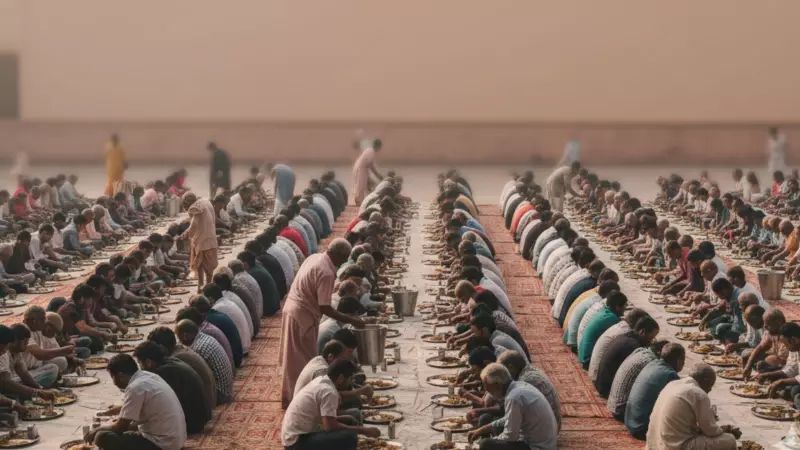
In a significant ruling, the Himachal Pradesh High Court has firmly dismissed a petition filed by langar sevadars and electricians of the renowned Mata Chintpurni Temple in Una district, who were seeking the regularisation of their services. The court reaffirmed that their work is 'gratuitous' and voluntary, establishing that no formal employer-employee relationship exists with the Temple Trust.
Court's Rationale: Absence of Formal Appointment
While delivering the judgment on November 7, Justice Sandeep Sharma laid down the fundamental prerequisites for claiming service benefits like regularisation. He stated that any individual seeking such relief must first demonstrate that they were formally appointed by the entity from which the benefit is claimed.
Justice Sharma elaborated, "Besides this, it is to be shown that such appointment was fair, transparent, in conformity with Articles 14 and 16 of the Constitution of India, meaning thereby that opportunity was given to every interested person to participate in selection process, appointment was against sanctioned post and that some amount was being paid regularly."

The court critically noted the absence of any appointment letters or documents issued by the Mata Shree Chintpurni Temple Trust to the petitioners. It concluded that merely producing documents showing that a temple officer had assigned duties was insufficient to prove a formal appointment by the Trust.
Sevadars' Claims and Legal Arguments
The petitioners, who claimed to have served as langar sevadars, mandir sevadars, and electricians for 15 to 16 years, argued for regularisation with all attendant benefits like pay and seniority. Their senior advocate, Ajay Sharma, contended that his clients had performed their duties diligently and to the satisfaction of the Trust, and that identity cards had been issued to them.
The counsel also referenced a 2014 case where the court had directed the temple trust to regularise the services of daily wage labourers. However, the High Court distinguished the present case, pointing out that the labourers in the 2014 instance were engaged by the trust in 1991, were paid daily wages, and had their muster rolls verified by a Junior Engineer—conditions absent for the current petitioners.
Long Legal Battle Concludes
This petition was the latest in a series of legal attempts by the sevadars. They had first approached the High Court in 2019, but their plea was dismissed in 2021 on the same grounds that their service was gratuitous. A subsequent review petition was disposed of in 2022, allowing them to make a representation to the Trust.
This representation was later rejected by the Commissioner-cum-Deputy Commissioner of the Temple Trust on the basis that the petitioners were neither temporary nor casual employees. The November 7 ruling, which challenges the rejection of this representation, marks the conclusion of this protracted legal fight, upholding the principle that voluntary religious service does not constitute formal employment under the law.