Punjab and Haryana High Court Takes Suo Motu Action Over Traffic Snarls Delaying Judges
The Punjab and Haryana High Court on Tuesday took suo motu cognizance of severe traffic congestion on the road leading to the court premises after multiple judges faced significant delays while commuting to work. The situation was described by the bench as a case of "gross negligence and dereliction of duty", prompting immediate judicial intervention.
Judges Stuck in Morning Gridlock
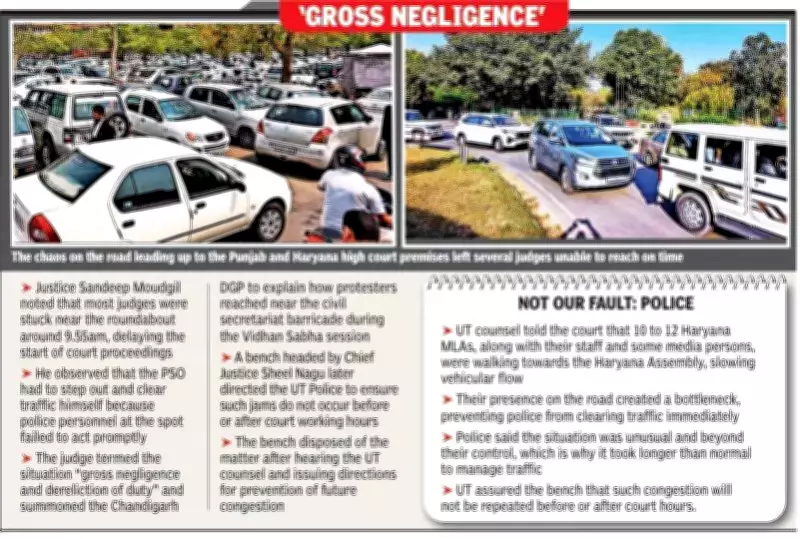
Justice Sandeep Moudgil of the High Court initiated the suo motu proceedings after observing that around 9:55 AM, most judges were trapped in a massive traffic jam near the roundabout accessing the court. This congestion directly resulted in the delayed commencement of court proceedings, disrupting the judicial schedule.
Justice Moudgil noted in his observations that the police personnel stationed at the critical roundabout failed to take prompt action to ensure the smooth passage of judges' vehicles. In a striking incident, the Personal Security Officer (PSO) attached to Justice Moudgil had to exit the vehicle to manually clear the traffic, highlighting the apparent laxity in police response.
Summons Issued to Chandigarh DGP
Compounding the traffic issues, the court also noted that protesters managed to reach the main gate of the civil secretariat barricade during the ongoing Vidhan Sabha session. Citing these twin failures, Justice Moudgil directed the Director General of Police (DGP) of Chandigarh, Sagar Preet Hooda, to remain present in court at 2 PM to provide an explanation.
The order explicitly stated that the situation represented a prima facie case of gross negligence and dereliction of duty by the Chandigarh police force. The matter was subsequently referred to the court of Chief Justice Sheel Nagu for further hearing.
Police Explanation and Court's Final Directive
During the afternoon hearing, DGP Sagar Preet Hooda appeared before the bench headed by Chief Justice Sheel Nagu, accompanied by the Senior Superintendent of Police (SSP) and the Superintendent of Police (Traffic) for Chandigarh. Representing the Chandigarh police, the senior standing counsel for the Union Territory provided a detailed explanation for the morning chaos.
The counsel attributed the traffic jam to the movement of 10-12 Haryana MLAs walking towards the Haryana assembly to attend the legislative session. According to the police representation, the MLAs were accompanied by their staff and some media personnel, which created an unusual vehicular blockage that took an abnormally long time to clear.
The UT counsel emphasized that Tuesday's specific jam was largely beyond the control of police officials but offered firm assurances that such traffic chaos would not recur, particularly before or after court hours. After considering these submissions, Chief Justice Sheel Nagu disposed of the matter with clear directions to the UT administration to make all possible efforts to prevent similar traffic snarls in the future.
Historical Context and Ongoing Challenges
This is not the first time the High Court has addressed traffic management issues. Last year, the court had directed Chandigarh police to deploy two Deputy Superintendent of Police (DSP)-rank officers during peak hours—from 8:30 AM to 10:30 AM and again from 3 PM to 5 PM daily—along with an adequate contingent of traffic police personnel to regulate movement on the court premises.
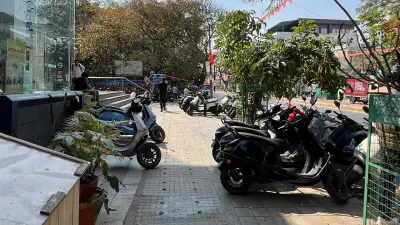
The Punjab and Haryana High Court experiences a daily footfall of approximately 30,000 individuals, including lawyers, litigants, court staff, and other visitors. A significant contributing factor to the traffic woes is the shortage of parking facilities within the court premises. To mitigate this, the UT police has permitted parking of cars on the roads adjacent to the high court, which often exacerbates congestion during peak hours.
The court's intervention underscores the critical need for effective traffic management to ensure the unimpeded functioning of the judiciary, particularly in a high-traffic zone like the High Court premises in Chandigarh.