Allahabad High Court Slams UP Police for Routine 'Leg-Shooting' Encounters to Please Seniors
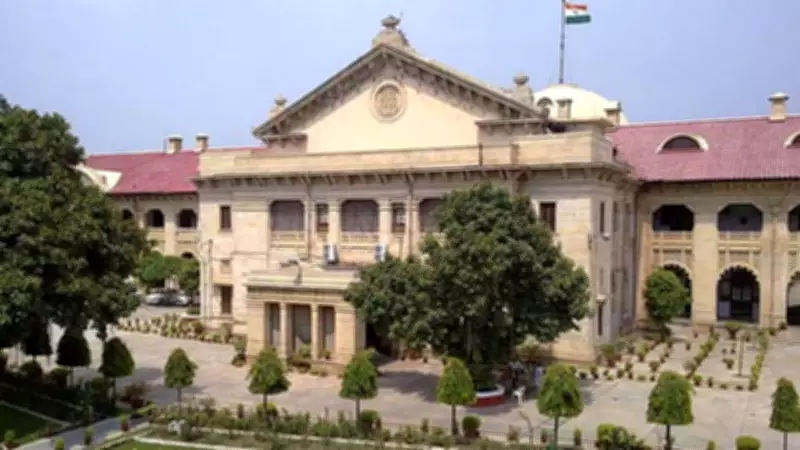
The Allahabad High Court has delivered a scathing indictment of police practices in Uttar Pradesh, stating that encounters where suspects are shot in the leg have "become a routine feature" in the state. The court asserted that such actions are often executed to "please senior officers or to teach a lesson to the accused," rather than being legitimate law enforcement measures.
Court Grants Bail, Issues Strict Guidelines After DGP and ACS Home Appearance
Hearing separate bail petitions from three individuals—Anas from Muzaffarnagar, Deepak Lohapita from Jhansi, and Raju alias Rajkumar from Mirzapur—who were arrested after being shot in the leg in different districts, the bench of Justice Arun Kumar Singh Deshwal expressed grave concern. The court noted it is frequently confronted with cases where police indiscriminately resort to firing, even in petty offences like theft, by projecting incidents as encounters.
In a significant development, the court granted bail to the three accused on Friday after Uttar Pradesh Director General of Police (DGP) Rajeev Krishna and Additional Chief Secretary (Home) Sanjay Prasad appeared before the bench via video conferencing. The court directed them to clarify if any oral or written directions were issued to police officers to fire at accused persons' legs or conduct such encounters.

Judicial Domain Encroachment and Misuse of Authority
The High Court emphasized that India is a democratic state governed by the rule of law, where the functions of the Executive, Legislature, and Judiciary are distinct. The court stated unequivocally that "the power to punish lies exclusively within the domain of the Courts and not with the police." Any encroachment by police into judicial functions cannot be tolerated.
The order further observed that neither has the State Government issued any direction to police officers to "teach a lesson" to accused persons by firing at their legs, nor can such acts be justified. Instead, the court suggested that certain police officers might be misusing their authority to attract attention from higher officers or create public sympathy by portraying incidents as encounters.
Standard Operating Procedures for Encounter Investigations
To ensure thorough, effective, and independent investigations into police encounters resulting in death, the bench issued a comprehensive list of Standard Operating Procedures (SOPs):
- All intelligence or tip-offs about criminal activities must be documented in writing, preferably in a case diary or electronic form.
- Independent investigations must be conducted by CID or another police station team under senior officer supervision.
- Information about incidents must be sent promptly to the National Human Rights Commission (NHRC) or State Human Rights Commission.
- Injured persons must receive medical aid, with statements recorded by a magistrate or medical officer.
- Six-monthly statements of all death cases in police firing must be submitted to NHRC by January 15 and July 15 each year.
- Disciplinary action and suspension must follow if evidence shows IPC offences in encounter deaths.
- Compensation should be granted to dependents of victims under relevant schemes.
- No out-of-turn promotions or instant gallantry awards should be given without established proof of gallantry.
- Victims' families may file complaints with sessions judges if procedures aren't followed.
Accountability Measures and Constitutional Ethos
The court warned that if police officers fail to follow Supreme Court guidelines from the PUCL case regarding encounters with deaths or grievous injuries, not only the team leaders but also District Police Chiefs (SP/SSP/Commissioner) would face contempt proceedings and disciplinary actions.
Justice Deshwal's bench noted that some police officers, "just to get out of turn promotion or appreciation from higher authority or to get fame in social media," unnecessarily use firearms to cause injuries below the knee. The court reiterated that such acts are impermissible as punishment authority rests with the judiciary, not police.

"India is a democratic country. It has to be run as per the ethos and directions of the Constitution of India which clearly distinguishes the role of legislature, executive and judiciary," the court emphasized, adding that police cannot assume judicial functions under the guise of appreciation or extraneous purposes.
The court acknowledged police rights to private defence and appropriate force use but stressed that when deaths or grievous injuries occur, Supreme Court-mandated procedures must be strictly followed. Notably, the bench pointed out that in the cases before it, no police officer sustained any injury, questioning the necessity and proportionality of firearm use in these alleged encounters.