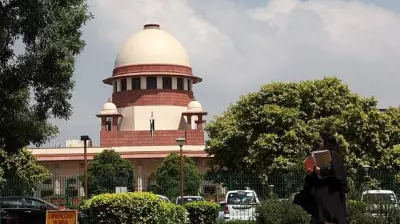
Allahabad High Court Rebukes UP Government Over Mosque Prayer Restrictions
The Allahabad High Court has delivered a sharp rebuke to the Uttar Pradesh government, rejecting an order that restricted the number of people allowed to offer prayers at a mosque in Sambhal district. The court cited law and order concerns as insufficient justification for such limitations.
Court Questions Competence of State Officials
In a strongly worded observation, a division bench comprising Justices Atul Sreedharan and Siddharth Nandan suggested that the Sambhal Superintendent of Police and District Collector should either resign or seek transfers if they feel incapable of enforcing the rule of law. The bench made this statement while hearing a petition filed by Munazir Khan of Sambhal district.
Fundamental Right to Worship Peacefully
The court order, dated February 27, emphasized that it is the state's fundamental duty to ensure every community can worship peacefully in designated places of worship. The bench clarified that when worship occurs on private property, no state permission is required, as established in previous court rulings.
The court stated: "This court has already settled that it is only where prayers or religious functions have to be held on public land or spill over onto public property that the involvement of the state is essential and permission must be sought."
Background of the Controversial Order
According to the petitioner, authorities had permitted only 20 persons to offer namaz at the mosque premises despite expectations of larger gatherings during the holy month of Ramzan. Government counsel defended the restriction, citing perceived law and order concerns as justification for limiting worshipper numbers.
Court Rejects Law and Order Justification
The bench firmly rejected this justification, emphasizing that maintaining law and order is precisely the state's responsibility. The court stressed that the rule of law must prevail in all circumstances, and every community must be able to practice its faith without unnecessary restrictions.
The court directed state government counsel to seek further instructions in the case and scheduled the next hearing for March 16.
Broader Implications for Religious Freedom
This ruling reinforces important constitutional principles regarding religious freedom in India. The court's strong stance sends a clear message about the state's obligation to protect worship rights while maintaining public order through proper law enforcement rather than restrictive measures.
The case highlights ongoing tensions between administrative convenience and fundamental rights, with the judiciary firmly upholding citizens' constitutional protections against arbitrary government restrictions on religious practice.