Allahabad High Court Demands Action Plan Following Noida Techie's Tragic Drowning
The Allahabad High Court has taken a firm stance in the case of a young techie's untimely death, issuing directives to multiple agencies to prevent similar tragedies. Hearing a Public Interest Litigation (PIL) concerning the drowning of 27-year-old Yuvraj Mehta, the court has mandated that the National Disaster Response Force (NDRF), State Disaster Response Force (SDRF), police, local administration, Noida Authority, and fire department collaborate to formulate a comprehensive action plan.
Details of the Tragic Incident That Sparked Public Outrage
Yuvraj Mehta, a 27-year-old software professional, lost his life in a harrowing accident on the intervening night of January 16 and 17. His vehicle plunged into a deep, water-filled trench at an undeveloped site in Noida's Sector 150. The trench, which had formed due to inadequate stormwater management, was located on land that had remained undeveloped for years under the control of Wiztown Planners.
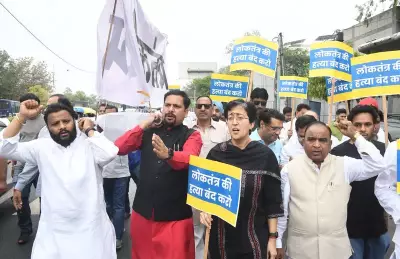
The incident triggered widespread public outrage, with local residents staging protests and leveling serious allegations of negligence against both the developers and the Noida Authority. Many questioned why such a hazardous condition was allowed to persist in a residential area without proper safety measures or warnings.

Court's Specific Directives and Timeline for Compliance
A division bench comprising Justices Mahesh Chandra Tripathi and Kunal Ravi Singh presided over the case and issued several specific orders. The court has directed all concerned agencies to submit their suggestions for creating an effective action plan that would prevent similar accidents in the future.
The bench has specifically asked counsel representing NDRF and SDRF to provide detailed information about the minimum time required for these disaster response forces to become operational once they receive information about an emergency situation. This directive aims to establish clear response protocols and ensure quicker intervention in future incidents.
The court has scheduled the next hearing for April 1, by which time all agencies must submit their responses and suggestions. This timeline creates urgency for the development of concrete safety measures and accountability mechanisms.
Court's Scrutiny of Noida Authority's Response and Accountability
During the hearing on March 17, the court expressed significant concerns about the Noida Authority's handling of the situation. "We have also perused the counter affidavit filed by the Noida Authority," the bench noted. "Even though notices were issued to various erring builders on February 6 to rectify the defects within three days, the counter affidavit is silent with regard to what remedial steps were taken and whether Noida Authority had actually verified the remedial steps taken."
The court further highlighted critical gaps in the Authority's response, pointing out that the affidavit failed to mention whether any nodal officer had been appointed in Noida specifically to handle emergency situations and coordinate between various agencies during crises.
"The affidavit is also silent as to who was the officer of Noida Authority who had reached the spot when the incident was being broadcast live," the bench observed. "We expect that an affidavit indicating the above should be filed by the next date of hearing."
Broader Implications for Urban Safety and Governance
This case has brought to light several systemic issues in urban governance and safety protocols:
- Inadequate monitoring of undeveloped sites that pose safety hazards
- Poor stormwater management leading to dangerous conditions
- Lack of clear emergency response coordination between agencies
- Absence of accountability mechanisms for government authorities
- Insufficient safety measures at construction and undeveloped sites
The court's intervention represents a significant step toward establishing better safety standards and accountability in urban development. By involving multiple agencies including disaster response forces, police, and local administration, the court aims to create a multi-layered approach to preventing similar tragedies.

The outcome of this case could potentially set important precedents for how cities across India handle safety at construction sites and undeveloped areas, particularly regarding water management and emergency response protocols.