Punjab and Haryana High Court Rules Menopause No Bar to IVF with Donor Eggs
In a landmark decision that reinforces reproductive rights for older couples, the Punjab and Haryana High Court has set aside an order denying assisted reproductive technology (ART) services to a 47-year-old woman and her husband, aged over 56. The court held that menopause and age restrictions under the Assisted Reproductive Technology (Regulation) Act, 2021, do not legally prohibit access to IVF with donor eggs.
Court Quashes State Authority Order on Multiple Grounds
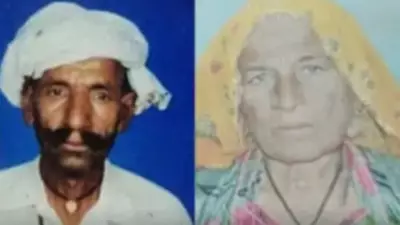
Justice Suvir Sehgal overturned the February 6, 2025, order of the State Appellate Authority, which had rejected the couple's plea based on four grounds: the husband's age exceeding the 55-year limit, the need for donor eggs due to the wife's menopause, health risks from a post-menopausal pregnancy, and concerns over sex selection. The couple, Sarbjit Kaur and her husband, lost their only son to jaundice in July 2024, and with their daughter married and Sarbjit Kaur in menopause for four years, natural conception was impossible.
Legal Analysis of Age Limits and Gamete Donation
On the issue of age, the court cited precedent from Manjit Kaur and another vs Union of India and others, stating that the ART Act imposes no age restriction on commissioning couples as a unit, only on individuals under Section 21(g). The state conceded that similar rulings by the Calcutta High Court had not been appealed, strengthening this interpretation.

Regarding donor eggs, Justice Sehgal emphasized that the ART Act explicitly permits gamete donation. He noted, "ART has been defined under the ART Act as all techniques that attempt to obtain a pregnancy by handling a sperm or the oocyte outside the human body... A gamete donor has been defined to be a person who provides sperm or oocyte with an objective of enabling an infertile couple or woman to have a child." The court referenced statutory provisions allowing ART banks to regulate such donations, asserting that denying this would violate the spirit of the ART and Surrogacy Acts.
Dismissal of Health and Sex Selection Concerns
The court dismissed health risk arguments, relying on an affidavit from the treating doctor confirming both petitioners were healthy, the wife fit to carry a pregnancy if implantation succeeded, and the husband's sperm count normal. The couple had been informed of risks and consented to proceed. Justice Sehgal ruled, "The risks involved in undergoing an ART procedure and chances of genetic abnormality in the offspring are not an embargo from undergoing the procedure under the ART Act."
On sex selection, the court found no statutory bar preventing couples with one living child from undergoing IVF, thereby rejecting this ground as untenable.
Implications for Reproductive Rights in India
This ruling sets a significant precedent for older couples seeking parenthood through ART, clarifying that menopause and age should not be automatic barriers under current laws. It underscores the judiciary's role in interpreting reproductive statutes in a manner that aligns with individual rights and medical advancements. The court directed that the couple be permitted to undergo ART services, including IVF, for conception and implantation, marking a victory for reproductive autonomy in the region.