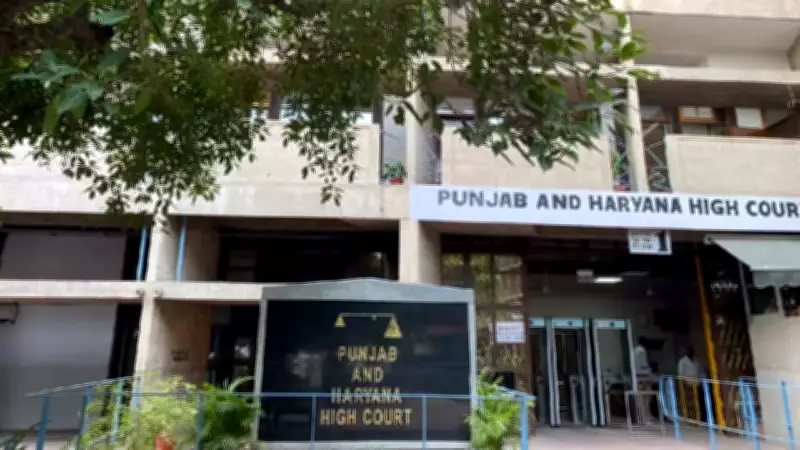
Punjab and Haryana High Court Clarifies Limits on Gallantry-Linked Service Benefits
In a significant judicial ruling, the Punjab and Haryana High Court has firmly defined the boundaries for claiming service benefits tied to gallantry, specifically in the context of the July 2015 Dinanagar terror attack in Punjab. The court held that a police officer who served as a 'reader' to a Deputy Superintendent of Police (DSP) and was not issued any weapon cannot be granted an out-of-turn promotion intended for personnel injured during the anti-terror operation.
Court Rejects Petition on Grounds of Negative Equality
Justice Jagmohan Bansal delivered the order while dismissing a petition filed by Jasbir Singh, a Punjab police officer. Singh had sought promotion benefits, arguing that he bravely reported to the Dinanagar police station and confronted the terrorists. However, the court made it unequivocally clear that administrative benefits linked to battlefield injuries cannot be expanded based on parity. The judgment emphasized that there cannot be negative equality, and courts must not perpetuate illegality merely because other officials might have been wrongly favored in similar cases.
Background of the Dinanagar Terror Attack
On July 27, 2015, heavily armed terrorists, disguised in Army uniforms, launched a brutal attack on the Dinanagar police station in Gurdaspur district, Punjab. This assault resulted in the tragic loss of lives and injuries to several policemen and civilians. In response, the Punjab council of ministers approved a comprehensive package of relief and recognition measures for those affected by the attack.
The measures included:
- Payment of full salary until superannuation to the families of martyred employees.
- Promotion and free medical treatment for injured employees.
- Financial assistance for injured civilians and families of deceased civilians.
- Recruitment benefits for certain affected home guards and next of kin.
Officer's Claims and Court's Rationale
In his plea before the High Court, Jasbir Singh contended that he was denied promotion benefits that were allegedly granted to other officials, some of whom he claimed were not even present at the scene of the attack. However, the court scrutinized his role and found that as a 'reader' to a DSP without being issued a weapon, he did not meet the criteria for out-of-turn promotion under the approved measures. The ruling underscores the principle that service benefits must be strictly aligned with the specific conditions and roles defined in such policies, preventing any dilution of standards through unwarranted claims.
This decision sets a precedent for future cases involving gallantry-linked benefits, reinforcing judicial commitment to upholding the integrity of administrative protocols in the face of terrorism-related incidents.