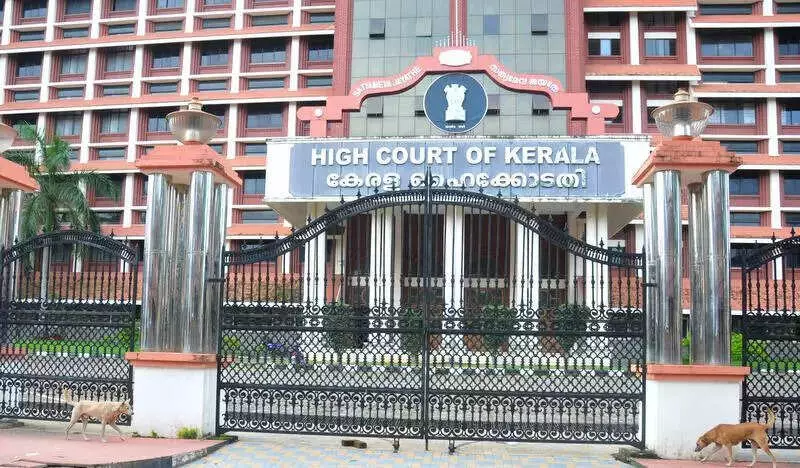
The Kerala High Court has come down heavily on both state and central authorities for their "lackadaisical attitude" in handling the case of a man deported from Kuwait, who subsequently went missing after being admitted to a government hospital in Kochi. The court has demanded a comprehensive response on the standard protocol for handling deported Indian citizens.
Court Questions Gap in Security and Surveillance
During a hearing on Thursday, a bench comprising Justices Devan Ramachandran and M B Snehalatha expressed serious concern over how Suraj Lama, who was deported from Kuwait, was allowed to pass through immigration and move freely in society without any evaluation or surveillance. The court pointedly asked how a person deported by another nation could be permitted such liberty without verification.
The bench observed that deportation by a foreign country is always based on a specific reason, which could range from medical issues to more serious concerns like terrorism. "Therefore, the case of Lama certainly throws up very difficult questions for all the authorities," the judges remarked orally.
Timeline of a Disappearance
The case stems from a petition filed by Santon Lama, the son of Suraj Lama, seeking help to trace his father. According to the petition, Suraj Lama had been living and working in Kuwait for several years. He was hospitalized there after suffering from acute toxic leukoencephalopathy caused by alcohol poisoning from consuming toxic liquor, which led to memory loss and disorientation.
He was deported to Kochi and arrived on October 5. After his arrival, he was reportedly seen at various locations in and around Kochi. The Thrikkakara police allegedly took him into custody on October 8 and admitted him to the Government Medical College Hospital in Kalamassery. Since that admission, his whereabouts have remained unknown.
In a previous hearing, the court was informed that an unidentified decomposed body had been discovered in marshy land near the same hospital. Consequently, the HC had directed the hospital superintendent to submit a detailed report on:
- How Lama was brought to the hospital.
- Under whose charge he was admitted.
- The circumstances under which he left the hospital premises.
On Thursday, the government pleader requested more time to furnish this report, leading the court to adjourn the hearing to December 10.
Broader Implications and Pending Answers
The court's criticism highlights a significant gap in inter-agency coordination and procedural follow-up for deported citizens. The bench has explicitly sought a comprehensive response from both the central and state governments regarding the official protocol that should be followed when an Indian citizen is deported back to the country.
This case underscores the potential risks when individuals, who may be vulnerable or require medical or psychological assessment, fall through the cracks of the system. The High Court's intervention now presses for accountability and a clear, standardized procedure to prevent such incidents in the future, ensuring the safety and proper handling of citizens returning to India under deportation orders.