The Bombay High Court on Wednesday allowed appeals filed by four accused in the 2006 Malegaon blasts case to challenge the charges framed against them under the stringent anti-terror law Unlawful Activities (Prevention) Act (UAPA) and other offences under the Indian Penal Code, including murder, attempt to murder, and attempting to cause communal breach of peace.
A division bench comprising Chief Justice Shree Chandrashekhar and Justice S.C. Chandak pronounced the judgment, stating, "Appeals are allowed." The accused had sought quashing of the charges framed against them.
Background of the Malegaon Blasts
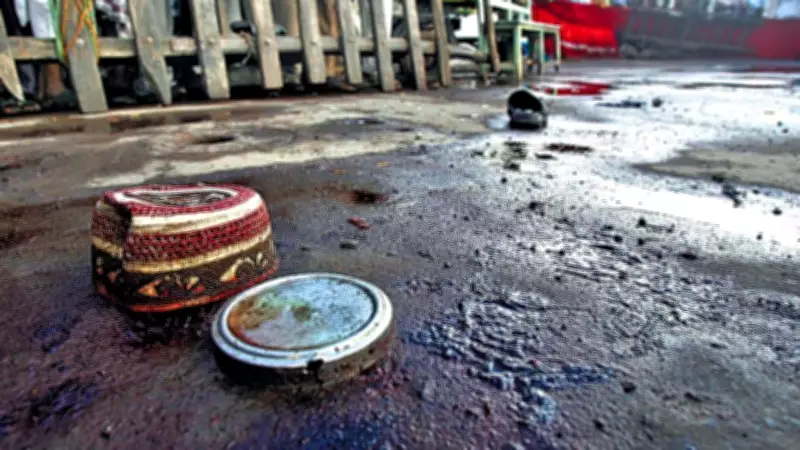
On September 8, 2006, at approximately 1:50 PM, four bombs exploded in Malegaon, a town in Maharashtra. Three of these explosions occurred in the compound of Hamidiya Masjid and Bada Kabrastan, while the fourth exploded at Mushawart Chowk. The blasts resulted in the deaths of 31 people and left over 312 others injured.

Nineteen years after the incident, a special trial court in Mumbai framed 19 charges against the four accused on September 30 last year, including charges under the Explosives Act. The National Investigation Agency (NIA) had filed a chargesheet in the case.
Accused and Their Defense
The four accused—Manohar Narwaria, Rajendra Chaudhary, Dhan Singh, and Lokesh Sharma—pleaded not guilty when the charges were read out. They subsequently approached the High Court in appeal this year to challenge the framing of charges. Their lawyer, Kaushik Mhatre, argued that there was no evidence against them and that no case was made out. Specifically, Chaudhary and Dhan Singh contended that the identification parade was conducted six and a half years after the incident.
Defense counsels Girish Kulkarni and Mhatre further argued that the primary evidence—a confession statement of Swami Aseemanand—on the basis of which the accused were arrested, had been rejected by two special NIA courts in Hyderabad in another blast case trial and elsewhere. They contended that this rendered the case against the accused baseless and precluded the need for a trial. The Hyderabad NIA court had rejected the confession statement on the grounds that it was recorded under “duress and coercion.”
The appeals also highlighted that the four accused had been granted bail by the High Court, which, after considering the NIA probe, observed that no evidence was collected to show any incriminating recovery from these four accused.
Details of the Explosions
Out of the four bombs, one was placed at the entrance iron gate of Hamidiya Masjid and Bada Kabrastan. The second was placed on a bicycle parked in the parking lot inside the compound. The third was hung on the power supply room situated in front of Vaju Khana inside the compound. The fourth bomb exploded at the crowded junction of Mushawart Chowk, placed on a bicycle near an electric pole. Together, these explosions killed 31 persons and injured over 312 others.
NIA's Stand and Investigation History
The NIA, represented by Additional Solicitor General Anil Singh and CBI special public prosecutor Kuldeep Patil, opposed the appeals on merit. The NIA's case was that the ultimate intention was to cause communal disharmony, as the day and timing of the blasts—Friday after prayers—was significant for the majority of the inhabitants in Malegaon.
The case was initially investigated by the Maharashtra Anti-Terrorist Squad (ATS), which arrested nine accused. The Central Bureau of Investigation (CBI) later confirmed the involvement of these nine accused. However, the NIA took over the investigation on April 4, 2011. On April 25, 2016, the special NIA court discharged all nine accused arrested by the ATS. The NIA had arrested the four accused—who appealed before the High Court—in 2013. All nine were dropped based on the confession of Swami Aseemanand, Mhatre argued. When the High Court asked whether the CBI had appealed against the discharge of the nine accused, the CBI stated that it had not.
Related Cases
In September 2008, another blast occurred in Malegaon that killed six people. In July last year, a special trial court acquitted all seven accused in that case, including Sadhvi Pragya Singh Thakur and Lieutenant Colonel Prasad Purohit. The four accused in the 2006 case were not among the seven acquitted in the 2008 case.