Government Accuses Activist Sonam Wangchuk of Instigating People in Sensitive Ladakh Border Region
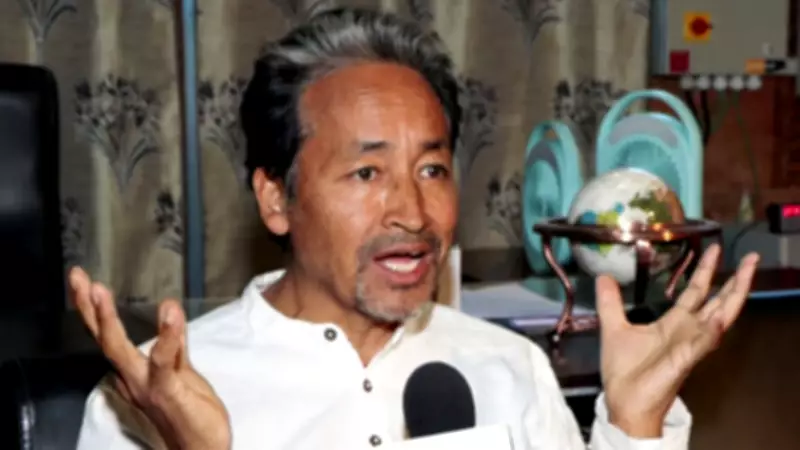
The Centre and Ladakh administration have submitted before the Supreme Court that there was "scrupulous compliance" of procedure while detaining activist Sonam Wangchuk under the National Security Act (NSA), 1980. They argued that Wangchuk was "instigating people" in a sensitive border area of Ladakh, which shares boundaries with both Pakistan and China.
Government's Arguments in Supreme Court Hearing
On Monday, Solicitor General Tushar Mehta, appearing for the Centre and the Ladakh administration, referred to several of Wangchuk's speeches during the hearing before a bench of Justices Aravind Kumar and P B Varale. The bench is hearing a petition filed by Wangchuk's wife Gitanjali J Angmo challenging his detention.
Mehta told the court that Wangchuk had expressed a desire to see a situation in Ladakh similar to what happened in Nepal and Bangladesh. "This is slightly objectionable because it (Ladakh) is an integral part of India and everyone accepts this but he repeatedly says it was a free kingdom," the Solicitor General stated.

Content of Wangchuk's Speeches Cited by Government
Resuming his submissions on Tuesday, Mehta again referred to Wangchuk's speeches, quoting the activist as saying: "'it is unacceptable that Ladakhi's cannot make their own laws or choose their own representatives despite once being a free kingdom'."
The government counsel further quoted Wangchuk's statements comparing Ladakh's situation with neighboring regions:
- "Even Skardu in Pakistan has its own Assembly and chief minister"
- "In China, Tibet and five other regions have autonomous rights, sometimes even more than ordinary provinces"
- "Even in Tibet there is an Assembly called Tibet Autonomous Region People's Congress (TARPC) who makes decisions"
- "If Pakistan and China can grant these rights, how can a democratic India deny them to Ladakh"
Government's Concerns About Border Security
Mehta emphasized the security implications of such statements, telling the court: "Your Lordships are dealing with a person who is instigating people in an area which is a border area, bordering both Pakistan and China and there are certain region-specific sensitivities involved."
When Justice Kumar asked if these talks would constitute a threat to the country, Mehta responded: "Threat to the country and public order." He clarified that Wangchuk's detention was not punishment for his statements but rather a preventive measure to stop such rhetoric from being repeated.
Additional Allegations and Legal Justifications
The Solicitor General also mentioned that Wangchuk had spoken about his connections in the Magsaysay and Nobel Prize committees, claiming he could influence who receives or is denied these prestigious awards.
Regarding Wangchuk's argument about being taken to Rajasthan for detention, Mehta cited Section 5 of the NSA, which deals with the "power to regulate place and conditions of detention." This section allows the appropriate government to specify detention locations and transfer detainees between states.
"There is an order of the appropriate government that he will be detained in a Rajasthan centre," Mehta explained to the court, emphasizing that the transfer was legally justified under the National Security Act provisions.
The government's submission represents a significant development in the ongoing legal battle surrounding Wangchuk's detention, highlighting concerns about border security and regional stability in the strategically important Ladakh region.