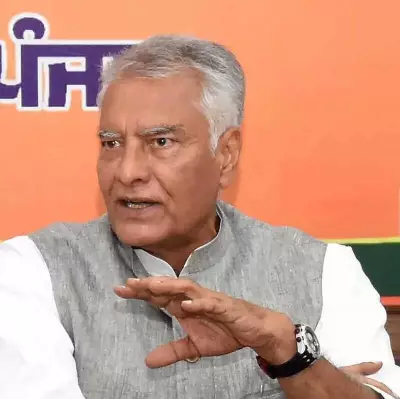
Once synonymous with left-wing extremism, the Gadchiroli district of Maharashtra has undergone a remarkable transformation, now resembling any other peaceful city, according to its top police official. Superintendent of Police Neelotpal, in an exclusive interview, detailed the multi-pronged strategy that led to the near-eradication of Maoist influence in this forest-rich region known as the 'lung of Maharashtra'.
The Three-Pronged Strategy That Crushed Maoist Influence
SP Neelotpal attributed the dramatic decline in Maoist activity to a concerted three-part approach. The first pillar was relentless anti-Maoist operations, which have led to the neutralization of 43 hardcore insurgents in the last three years alone. The second was the Civic Action Program, which rebuilt shattered trust between the police force and the local tribal population. The third, and perhaps most impactful, was the effective implementation of the state's surrender-cum-rehabilitation policy, which has drawn over 126 surrenders in just one year.
The numbers tell a compelling story. As of January 1, 2024, official records listed around 100 active Maoist cadres in Gadchiroli. Today, that number has plummeted. "We are left with barely 10 whose whereabouts are not traceable in the district," stated Neelotpal, adding that most remaining elements are confined to the Narayanpur border area. The police have a clear message for them: surrender or face neutralization.

From Fear to Normalcy: Gadchiroli's New Reality
The change on the ground is palpable. "It looks like any normal city, I would say even better than several cities," the SP remarked. The fear that once gripped residents, preventing night travel, has dissipated. People now move freely even in the deep forest areas after dark. This newfound security is underpinned by tangible development: wide roads, 24/7 electricity, and mobile connectivity have reached the district.
A significant milestone was Gadchiroli's removal from the Centre's list of the six most Maoist-affected districts after a recent reclassification. To consolidate this peace, the police have aggressively tackled historical security vacuums. From an area of 3,000 square kilometres with no proper police presence, the force has established eight new police camps since January 2023, including one in the remote Abujhmad region. While about 700 square kilometres still lack coverage, more Forward Operating Bases are planned to ensure Maoism cannot revive.
Winning Hearts and Minds: Police as Service Providers
Beyond boots on the ground, the Gadchiroli police's masterstroke has been rebranding themselves as facilitators of development. Through the 'Police Dadalora Khidki' (Window of the Police) initiative launched in 2021, officers act as bridges between the tribal population and government schemes. They help fill out forms and navigate bureaucracy, assisting a staggering 11.7 lakh beneficiaries over four years.
The civic outreach extends to education and employment. The 'One Village, One Library' initiative benefits over 8,000 tribal students. Furthermore, the police coach youth for government exams, with 205 tribal students securing government jobs so far. This sustained effort has yielded a critical victory: zero Maoist recruitment from Gadchiroli in the last five years.
The surrender policy, backed personally by Deputy Chief Minister Devendra Fadnavis, has been a magnet for cadres losing faith in the movement. Under Project Sanjeevani, surrendered individuals receive land, PMAY houses, financial aid, and jobs—like the 70 now employed at the Lloyds plant in Khonsari. For those lacking education, literacy camps are held to help them clear Class 8, a prerequisite for skill development programs.
"The surrendered cadres realise that the movement has ended, that it has lost public support," Neelotpal observed. They are adjusting quickly to normal life, with one couple recently celebrating the birth of a baby boy—a family life unthinkable in the jungles.

New Challenges and a Tech-Savvy Force
With the Maoist threat receding, Gadchiroli police are shifting focus to routine law and order. Anticipating challenges from rising industrialization, they have begun night patrolling in plain areas to prevent thefts—a practice previously unthinkable.
The force is technologically advanced, using Geographic Information System (GIS) mapping for all operations and satellite trackers to monitor troop movement. A fleet of about 160 drones, including 14 high-end models on the Chhattisgarh border, act as 'eyes in the sky'. This tech edge, combined with strong inter-departmental coordination that fast-tracks development works, ensures Gadchiroli's hard-won peace is here to stay.